What is the NIST Framework [Complete Guide]
The NIST cybersecurity framework is a powerful tool for organizing and enhancing your cybersecurity program. It offers guidelines and best practices to help organizations strengthen their cybersecurity defenses.The framework provides a set of recommendations and standards that enable organizations to better identify and detect cyber-attacks. It also gives clear guidelines on how to respond to, prevent, and recover from cyber incidents.
This guide breaks down the NIST Framework into manageable sections. You’ll find easy-to-follow explanations, practical insights, and clear steps for implementation.Let’s dive in to explore what the NIST Framework is and how it can benefit your organization.
What is “NIST Framework”? Definition
Created by the National Institute of Standards and Technology (NIST), this framework addresses the gap in cybersecurity standards and offers a uniform set of rules and guidelines that organizations can use across different industries.The NIST Cybersecurity Framework (NIST CSF) is widely regarded as the benchmark for building a robust cybersecurity program. Whether you are just setting up a cybersecurity program or already have a mature cybersecurity program, the NIST framework offers value by serving as a top-level security management tool that helps assess and manage cybersecurity risks throughout the organization.
The framework provides a common language and systematic methodology for managing cybersecurity risk. It helps organizations identify, protect, detect, respond to, and recover from cyber threats.
In essence, it’s a blueprint for managing cybersecurity.
What is a NIST Frameworks List?
NIST offers several frameworks that cater to cybersecurity and risk management aspects. Here are the primary ones:
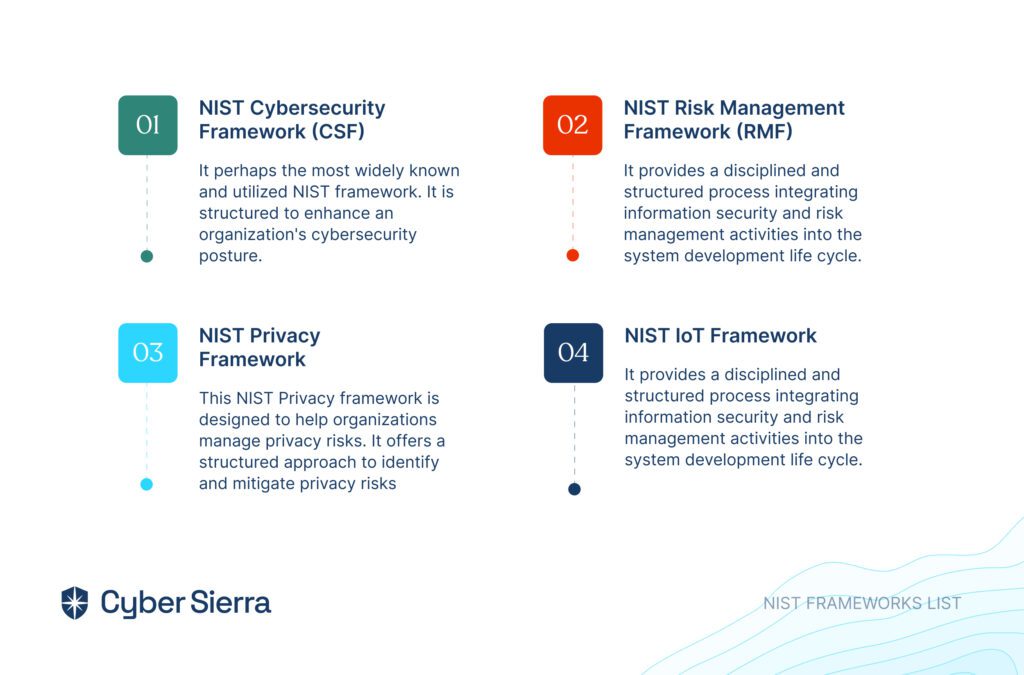
- NIST Cybersecurity Framework (CSF): Focuses on managing and reducing cybersecurity risk.
- NIST Risk Management Framework (RMF): Guides organizations in managing risks to their information and systems.
- NIST Privacy Framework: Helps organizations manage privacy risks.
- NIST IoT Framework: Addresses the cybersecurity challenges of Internet of Things (IoT) devices.
Each framework serves a specific purpose and can be tailored to meet the needs of different organizations.
1. NIST Cybersecurity Framework (CSF)
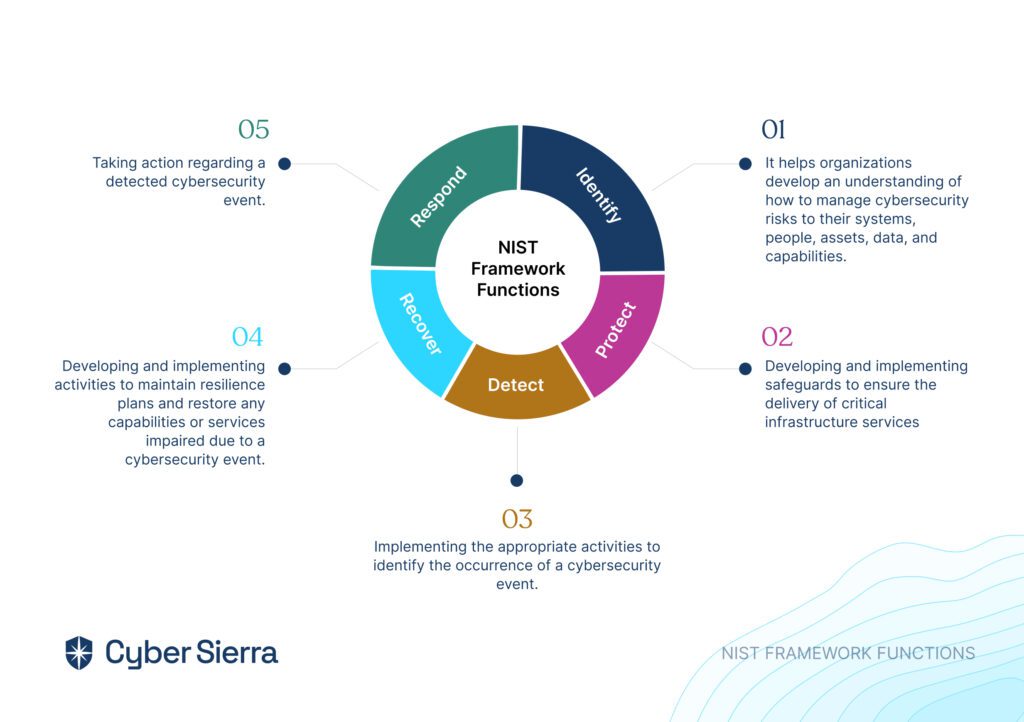
The NIST CSF is perhaps the most widely known and utilized NIST framework. It is structured to enhance an organization’s cybersecurity posture. The framework is built around five core functions: Identify, Protect, Detect, Respond, and Recover. These functions form a comprehensive and continuous process to manage and mitigate cybersecurity risks.
2. NIST Risk Management Framework (RMF)
The NIST RMF provides a disciplined and structured process integrating information security and risk management activities into the system development life cycle. This framework helps organizations categorize their information systems, select and implement appropriate security controls, and continuously monitor their security state.
3. NIST Privacy Framework
This NIST Privacy framework is designed to help organizations manage privacy risks. It offers a structured approach to identify and mitigate privacy risks while enabling organizations to build and maintain customer trust. The Privacy Framework is structured similarly to the Cybersecurity Framework, making it easy for organizations to integrate privacy and cybersecurity practices.
4. NIST IoT Framework
As the Internet of Things (IoT) expands, associated cybersecurity risks do too. The NIST IoT Framework addresses these unique challenges, providing guidance on securing IoT devices and systems. It emphasizes the importance of considering cybersecurity from the design phase through the entire lifecycle of IoT devices.
What are the NIST Framework Functions?
The NIST Cybersecurity Framework comprises five key functions. These functions provide a strategic view of the lifecycle of an organization’s cybersecurity risk management.
1. Identify
The Identify function lays the foundation for a strong cybersecurity program. It helps organizations develop an understanding of how to manage cybersecurity risks to their systems, people, assets, data, and capabilities. This function emphasizes the importance of understanding the business context, the resources that support critical functions, and the associated cybersecurity risks. By doing so, it enables organizations to focus and prioritize their efforts according to their risk management strategy and business needs.
Key activities include:
- Asset Management: Creating an inventory of all physical and software assets.
- Business Environment: Understanding the organization’s mission, objectives, and activities.
- Governance: Establishing policies, procedures, and processes to manage and monitor the organization’s regulatory, legal, risk, environmental, and operational requirements.
- Risk Assessment: Identifying potential threats, vulnerabilities, and impacts.
- Risk Management Strategy: Establishing a strategy to manage risks, including risk tolerance levels and risk prioritization.
2. Protect
Developing and implementing safeguards to ensure the delivery of critical infrastructure services. This includes access control, awareness and training, data security, information protection processes and procedures, maintenance, and protective technology.
Key activities include:
- Access Control: Managing who has access to information and resources.
- Awareness and Training: Educating employees about cybersecurity risks and practices.
- Data Security: Protecting information at rest and in transit.
- Information Protection Processes and Procedures: Developing and maintaining security policies and procedures.
- Maintenance: Performing regular maintenance and repairs of systems and technology.
- Protective Technology: Implementing security technologies to protect against threats.
3. Detect
The Detect function aids in implementing the appropriate activities to identify the occurrence of a cybersecurity event. This involves anomalies and events, continuous monitoring, and detection processes.
Key activities include:
- Anomalies and Events: Identifying and analyzing deviations from normal operations.
- Continuous Monitoring: Monitoring networks and systems for signs of cybersecurity incidents.
- Detection Processes: Establishing and maintaining detection processes to ensure timely and adequate awareness of anomalies.
4. Respond
Respond refers to taking action regarding a detected cybersecurity event. This includes response planning, communications, analysis, mitigation, and improvements.
Key activities include:
- Response Planning: Developing and implementing response plans for detected incidents.
- Communications: Coordinating response activities with internal and external stakeholders.
- Analysis: Analyzing incidents to determine their scope and impact.
- Mitigation: Containing and mitigating the effects of incidents.
- Improvements: Learning from incidents to improve future response efforts.
5. Recover
Developing and implementing activities to maintain resilience plans and restore any capabilities or services impaired due to a cybersecurity event. This encompasses recovery planning, improvements, and communications.
Key activities include:
- Recovery Planning: Developing and implementing plans to restore services and capabilities.
- Improvements: Making improvements based on lessons learned from past incidents.
- Communications: Coordinating recovery efforts with internal and external stakeholders.
Benefits of NIST Framework
1. Improved Risk Management
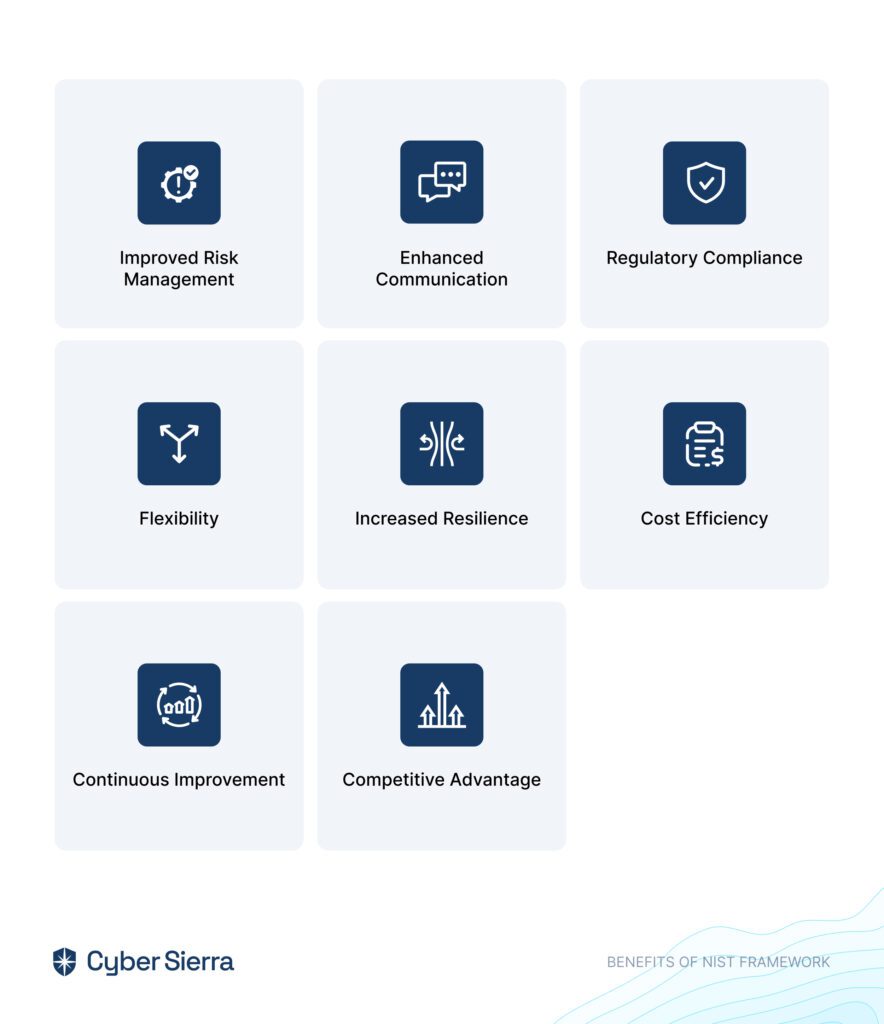
The NIST Framework helps you identify and manage cybersecurity risks more effectively. It provides a clear methodology for assessing and mitigating risks. By using the framework, organizations can take a proactive approach to managing risks, which reduces the likelihood of cyber incidents.
2. Enhanced Communication
Using a common language improves communication about cybersecurity risks and practices within your organization and with external stakeholders. This clarity helps align the organization’s cybersecurity practices with its overall goals and ensures everyone understands their roles and responsibilities.
3. Regulatory Compliance
The framework aligns with various regulatory requirements, making it easier for your organization to comply with industry standards and legal obligations. This can reduce the risk of non-compliance penalties and improve the organization’s reputation.
4. Flexibility
The NIST framework is adaptable to organizations of all sizes and sectors. Its flexible nature allows you to tailor it to your needs and capabilities. This means that both small businesses and large enterprises can benefit from implementing the framework.
5. Increased Resilience
By following the framework, your organization can enhance its ability to prevent, detect, and respond to cyber threats, thereby increasing overall resilience. This helps ensure business continuity and protects the organization’s assets and reputation.
6. Cost Efficiency
Implementing the NIST framework can save costs by reducing the frequency and severity of cybersecurity incidents. Organizations can avoid the high costs associated with data breaches and system downtimes by preventing incidents and minimizing its impact.
7. Continuous Improvement
The NIST framework promotes a culture of continuous improvement. By regularly reviewing and updating cybersecurity practices, organizations can stay ahead of emerging threats and maintain a robust security posture.
8. Competitive Advantage
Organizations that implement the NIST framework stand to gain a competitive advantage. Demonstrating a strong commitment to cybersecurity can enhance customer trust and differentiate the organization from its competitors.
How to Implement NIST Framework
Step 1: Prioritize and Scope
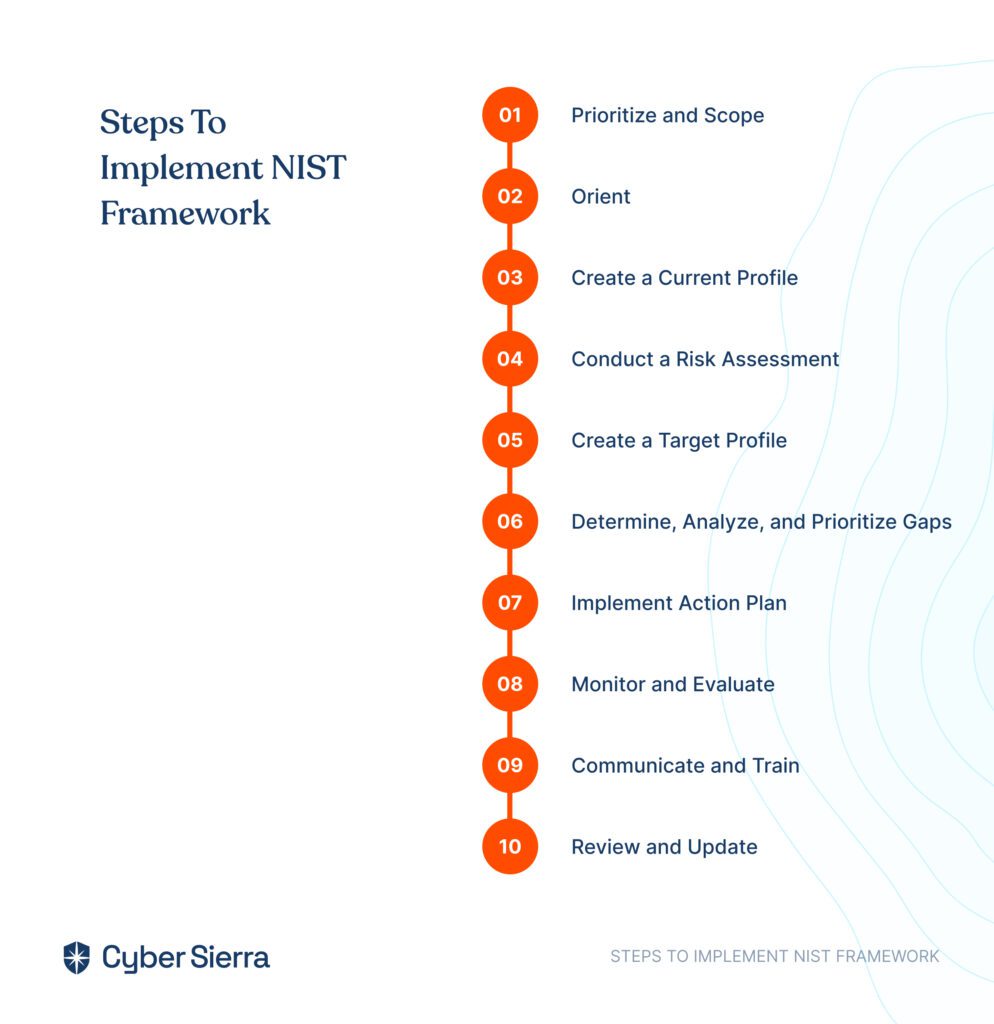
Identify your organization’s high-priority business objectives and overarching priorities. Pinpoint the systems and assets that underpin these crucial priorities. Doing so will help concentrate the framework’s implementation on the areas of utmost importance to your organization.
Step 2: Orient
Next, identify the related systems, assets, regulatory requirements, and overall risk approach. This step helps you understand the context in which you will implement the framework. It involves gathering information about your organization’s environment and existing cybersecurity practices.
Step 3: Create a Current Profile
Evaluate your existing cybersecurity practices and pinpoint any gaps. This will help you understand your current standing and areas requiring improvement. Establishing a current profile involves assessing your existing controls and processes against the requirements outlined in the NIST framework.
Step 4: Conduct a Risk Assessment
Conduct a risk assessment to gain an understanding of the cybersecurity risks facing your organization. This entails identifying potential threats, vulnerabilities, and their potential impacts. A comprehensive risk assessment aids in prioritizing your cybersecurity efforts based on the most significant risks.
Step 5: Create a Target Profile
Outline the desired state of cybersecurity outcomes. This profile will guide your efforts in reaching the desired level of cybersecurity. The target profile reflects the organization’s goals and objectives for managing cybersecurity risks.
Step 6: Determine, Analyze, and Prioritize Gaps
Identify the gaps between your current profile and target profile. Prioritize these gaps based on their impact and the resources required to address them. This step helps you focus on the most critical areas for improvement.
Step 7: Implement Action Plan
Develop and implement an action plan to close the identified gaps. This plan should include specific steps, responsible parties, and timelines. The action plan ensures that the organization takes concrete steps to improve its cybersecurity posture.
Step 8: Monitor and Evaluate
Monitor and evaluate the effectiveness of the implemented controls and processes regularly. This helps ensure the organization’s cybersecurity measures remain effective and adapt to changing threats. Continuous monitoring and evaluation are key to maintaining a strong cybersecurity posture.
Step 9: Communicate and Train
Ensure that all relevant stakeholders are aware of the controls and processes implemented. Provide training to employees to enhance their cybersecurity awareness and skills. Effective communication and training are critical for the successful implementation of the NIST Framework.
Step 10: Review and Update
Periodically review and update the implemented controls and processes. This helps ensure that the organization’s cybersecurity measures stay current and effective. Regular reviews and updates are crucial for keeping pace with evolving cybersecurity threats and
How can Cyber Sierra help you comply with NIST CSF Framework?
Cyber Sierra’s AI-powered cybersecurity platform has a pre-built NIST compliance module to help you identify gaps in your existing control measures. You have the flexibility to use our pre-mapped controls or create your own customized controls. By integrating these controls with our automated testing suite, you can achieve a tailored compliance outcome that seamlessly combines customization and automation.
Schedule a demo now to see how Cyber Sierra can streamline your TPRM processes. Our platform effectively mitigates third-party risks so you can focus on driving business growth through strategic partnerships.
Srividhya Karthik is a seasoned content marketer and the Head of Marketing at Cyber Sierra. With a firm belief in the power of storytelling, she brings years of experience to create engaging narratives that captivate audiences. She also brings valuable insights from her work in the field of cybersecurity and compliance, possessing a deep understanding of the challenges and pain points faced by customers in these domains.
Find out how we can assist you in
completing your compliance journey.