If you’re reading this post, you understand the importance of the NIST cybersecurity framework in fortifying the security posture of federal agencies and private sector organizations.
You also know the importance of getting NIST certification to demonstrate your adherence to better and more robust cybersecurity standards. But where do you begin?
Getting NIST certified seems like an overwhelming task, making even the most tech-savvy think twice.
The complex standards and guidelines, coupled with the resource-intensive process, often deter companies from even trying.
In this guide, we will delve into everything you need to know about the National Institute of Standards and Technology (NIST) certification process.
Whether you are a business owner or government agency looking to enhance your cybersecurity measures or an individual interested in learning more about NIST standards, this ultimate guide will provide you with all the essential information you need to understand the certification process and its significance.
Let’s dive in!
What is NIST certification?
NIST certification refers to credentials aligned with the National Institute of Standards and Technology Cybersecurity Framework (NIST CSF). NIST is a non-regulatory agency under the U.S. Department of Commerce that provides a structured approach for managing and reducing cybersecurity risks across the cybersecurity lifecycle.
There are two types of NIST certifications:
- NIST Cybersecurity Framework Certification: This professional certification validates a comprehensive understanding of the NIST CSF. It is ideal for cybersecurity professionals who aim to implement and manage a cybersecurity program using the NIST framework’s core functions—identify, Protect, Detect, Respond, and Recover.
- NIST Cybersecurity Professional Foundation Certificate: This foundational certificate verifies the knowledge required to apply NIST standards effectively. It focuses on the principles and core functions of the NIST CSF, preparing candidates for more advanced roles in cybersecurity.
Achieving NIST certification ensures cybersecurity professionals are proficient in applying NIST’s guidelines to safeguard information systems.
This credential provides peace of mind to organizations by confirming that certified individuals are equipped to address cybersecurity challenges systematically.
Certification also serves as a benchmark in the cybersecurity lifecycle, reinforcing the organization’s commitment to adhering to a recognized cybersecurity framework and enhancing overall program efficacy.
Candidates must pass a professional certification exam, which tests their understanding of the framework’s components and practical application in real-world scenarios. This certification boosts individual expertise and strengthens the organizational cybersecurity posture.
In summary, NIST certification is crucial for professionals and organizations striving for excellence in cybersecurity, ensuring adherence to a proven, effective framework.
Who Requires NIST certification?
NIST certification is required for organizations that do business with the U.S. federal government and those that don’t.
Here’s a breakdown of who requires NIST compliance:
- Federal agencies must comply with NIST standards to protect federal information and information systems. This is mandated by FISMA and supported by the NIST Special Publication (SP) 800 series, especially NIST SP 800-53, which provides a catalog of security and privacy controls.
- Cloud service providers working with federal agencies must meet NIST SP 800-53 controls as part of FedRAMP.
- Contractors and subcontractors working with the Department of Defense (DoD) must comply with NIST SP 800-171 to protect Controlled Unclassified Information (CUI).
- Industries such as energy, healthcare, and financial services may be required to follow NIST guidelines to enhance cybersecurity practices, as recommended by NIST CSF.
- Companies handling sensitive data may adopt NIST standards voluntarily to enhance their security posture and meet client or regulatory expectations.
- Institutions receiving federal grants may need to comply with NIST standards to protect sensitive research data.
- States and local entities using federal funds might need to comply with NIST standards to secure information systems and data.
- Multinational companies might adopt NIST guidelines to align with international best practices and enhance security measures across various jurisdictions.
Importance of NIST certification
NIST certification is vital for both individuals and organizations. It supports career growth, enhances security knowledge, and helps organizations meet compliance requirements, thereby ensuring robust and effective cybersecurity programs.
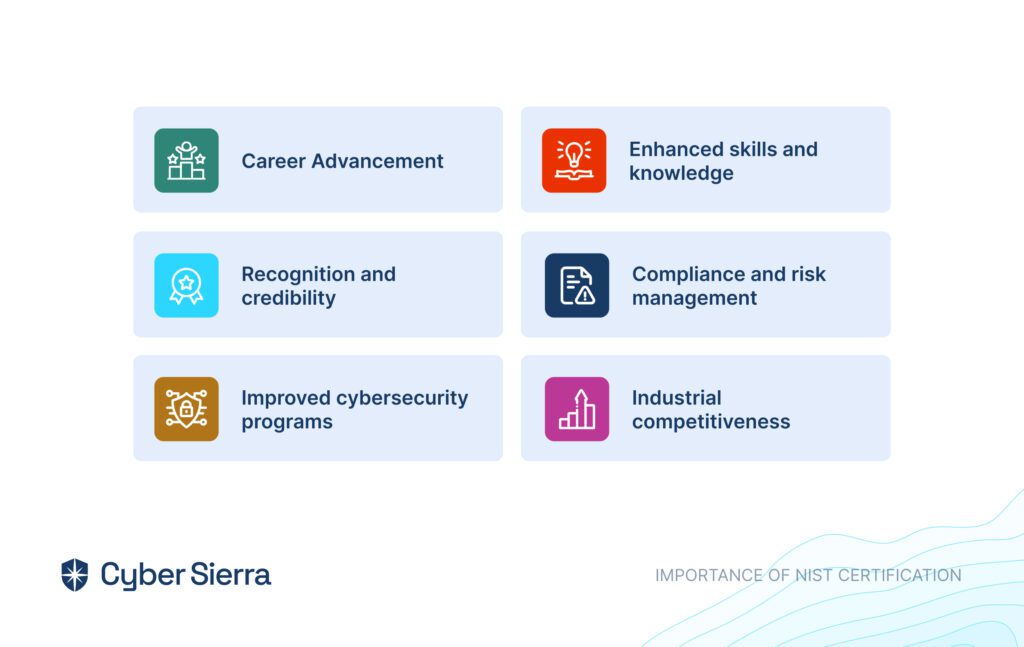
For individuals, NIST CSF certification is beneficial in the following ways:
1. Career Advancement
Obtaining a NIST CSF certification validates a cybersecurity professional’s knowledge and skills in applying the NIST CSF. This certification demonstrates expertise in creating and managing cybersecurity programs and enhancing career opportunities and prospects.
2. Enhanced skills and knowledge
Certification ensures professionals are adept in the latest security requirements and practices. They gain practical insights into the application of standards, which helps them effectively contribute to larger organizations’ cybersecurity strategies.
3. Recognition and credibility
NIST cybersecurity framework professional certification enhances credibility. It signals to employers that the individual has met rigorous standards and successfully passed certification exams or online exams, proving their capability in cybersecurity.
For organizations attaining NIST certification is important for the following reasons:
4. Compliance and risk management
For larger organizations, compliance with the NIST CSF is crucial for meeting security requirements and regulatory compliance. Certified information security teams can implement a robust cybersecurity framework, helping to mitigate risks and safeguard sensitive data.
5. Improved cybersecurity programs
Organizations benefit from hiring individuals with NIST CSF certifications, as they bring expertise in applying the NIST standards. This ensures the development and maintenance of effective cybersecurity programs tailored to specific needs and threats.
6. Industrial competitiveness
Adopting and demonstrating compliance with the NIST cybersecurity framework gives organizations a competitive edge. It reassures clients and partners that the organization meets high-security standards, fostering trust and business growth.
How Can My Organization Become NIST Certified?
To achieve NIST certification, your organization must follow a structured process that ensures compliance with the National Institute of Standards and Technology (NIST) cybersecurity framework. Here are the seven7 steps for becoming NIST certified:
Step 1. Know Your Current Security Posture
The first step in the NIST cybersecurity framework certification process is to evaluate your organization’s current security posture.
This will help you to better align your strategies with NIST’s guidelines and establish a formal structure for your organization’s cybersecurity initiative.
Start by conducting a thorough risk assessment to understand existing vulnerabilities, threats, and security controls. Review your IT infrastructure, including hardware and software, to identify any security gaps or hardware errors.
Next, evaluate your current access controls to determine how effectively they protect against unauthorized access and suspicious activities. Ensure you document any findings in an assessment report.
This TPRM report serves as the foundation for your compliance efforts and helps identify areas needing improvement. Use this opportunity to review your existing security policies and procedures making sure they align with the NIST cybersecurity framework.
Step 2. Develop a NIST Risk Management Framework (RMF)
Once you have assessed your current security state, you need to develop a NIST Risk Management Framework (RMF).
This step is pivotal in embedding a formal structure into your compliance efforts, guiding the implementation of controls to mitigate identified risks and protect your organization’s assets.
The framework provides a structured approach for managing cybersecurity risks and involves:
- Categorizing information systems based on the impact of a potential security breach.
- Selecting appropriate security controls.
- Implementing them effectively.
Ideally, the RMF provides security guidance on integrating security controls into your organization’s daily operations. This includes creating a policy framework that outlines procedures for risk assessment, risk mitigation, and continuous monitoring. Make sure the RMF aligns with the NIST cybersecurity framework to support your cybersecurity certification goals.
Step 3. Implement NIST-Compliant Access Controls
Access controls are a critical component of the NIST cybersecurity framework. These controls ensure that only authorized personnel have access to sensitive data and systems.
Creating NIST-compliant access controls involves designing and implementing mechanisms to manage who can access your information systems and data. This step requires developing and enforcing policies that regulate user access based on roles and responsibilities.
Implement controls such as multi-factor authentication, role-based access, and encryption to help safeguard against unauthorized access and potential data breaches. Next, review and update these access controls regularly to adapt to changing threats and organizational needs. This ensures that your security controls remain effective in protecting sensitive information.
Additionally, educate employees on the importance of adhering to these access controls to minimize human error and enhance overall security posture.
Step 4. Prepare to Manage Audit Documentation
Managing audit documentation is critical for demonstrating compliance with the NIST cybersecurity framework. Begin by establishing a comprehensive audit documentation process that includes recording all security policies, procedures, and controls implemented within your organization.
Proper documentation management not only supports the certification exams but also helps in maintaining a formal structure for ongoing compliance efforts.
Here, you should detail the methods used for the implementation of controls and how they address identified risks. Ensure that all documentation is accurate, up-to-date, and readily accessible for review during an audit.
Also, organize your audit preparation by categorizing documents according to their relevance to different audit processes. This approach streamlines the audit and reduces audit costs by making information easily retrievable.
Performing routine audits is essential for maintaining compliance with the NIST security standards. These audits help identify vulnerabilities and ensure that all security controls are functioning correctly. They can also help to address potential security weaknesses before they can be exploited.
Schedule regular security audits to assess the effectiveness of your implemented security controls and identify areas for improvement. These audits should evaluate the adherence to your established policies and the robustness of your access controls.
Use the findings from these audits to update your risk assessment and refine your security measures.
Document audit findings thoroughly, and use them to adjust your security posture as necessary. This proactive approach to auditing ensures continuous alignment with NIST standards and supports your cybersecurity certification efforts.
Step 6. Get NIST Audited
After implementing all necessary security controls and documenting your processes, you need to undergo an external audit to ensure compliance with NIST standards.
This audit is conducted by an accredited third-party auditor who evaluates your organization’s cybersecurity practices and controls to determine if they meet the requirements for NIST certification.
Prepare for this auditor exam by ensuring all audit documentation is complete and up-to-date.
Preparing for NIST audit not only helps in passing the certification exams but also strengthens your overall security posture.
The audit will assess the implementation of your security controls, evaluate your risk management framework, and verify compliance with NIST’s guidelines.
Your organization must successfully pass this audit to demonstrate its commitment to maintaining robust cybersecurity practices. The audit also provides an official certification that can enhance your credibility with clients and stakeholders.
Step 7. Provide Ongoing Training
Providing ongoing training helps in fostering a culture of security within your organization. This is especially important given that human error accounts for 52% of security breaches.
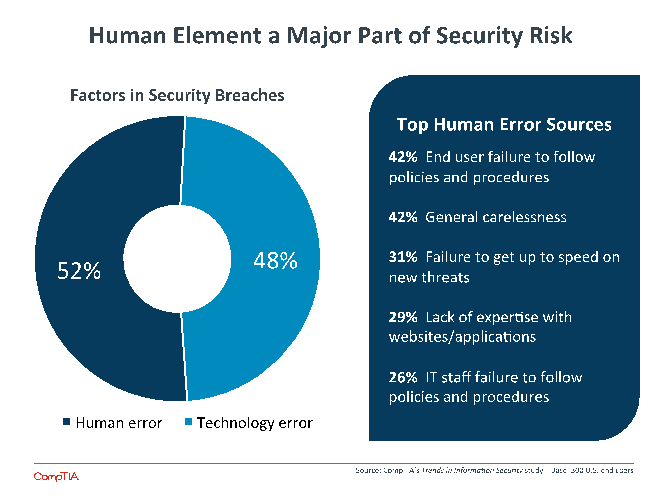
By continuously educating your workforce, you minimize human error and enhance the effectiveness of your security measures. Besides, ongoing training supports your compliance efforts and helps maintain the formal structure required for NIST certification, ensuring your organization remains resilient against cyber threats.
Therefore, provide regular training sessions to ensure employees are aware of the latest security policies, understand the importance of access controls, and recognize and respond to suspicious activities.
You should also incorporate training into your organization’s policy framework to address evolving threats and changes in the cybersecurity landscape. You can do this by offering online exams to assess employees’ understanding and adherence to security protocols.
How Long Does It Take to Get NIST Certified?
Achieving NIST certification (often referring to compliance with NIST standards like NIST SP 800-171 or NIST SP 800-53) can vary in time based on several factors such as:
- Organization size and complexity: Larger organizations or those with complex IT environments may take longer.
- Current security posture: Organizations with robust security practices already in place will likely achieve compliance faster.
- Resource availability: Organizations with dedicated teams and external consultants can accelerate the process.
Here is a detailed breakdown of the processes and approximate timelines:
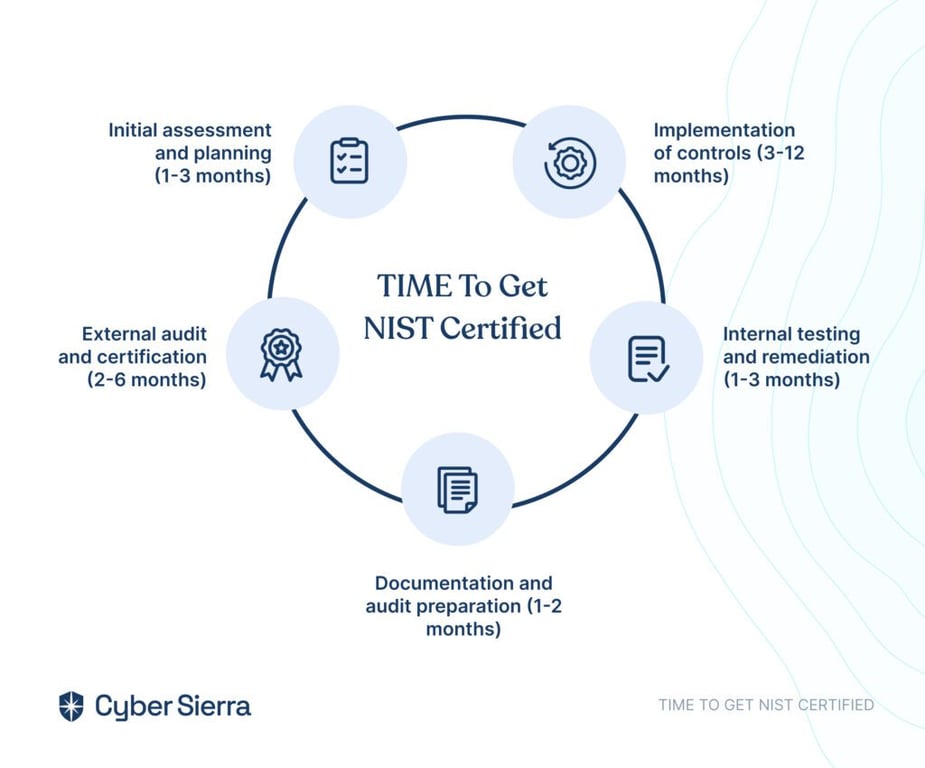
1. Initial assessment and planning (1-3 months)
Processes involved:
- Gap analysis: Identify gaps between current practices and NIST requirements.
- Scope definition: Define the systems and processes that need to be compliant.
- Resource allocation: Assign internal or external resources to manage the compliance effort.
2. Implementation of controls (3-12 months)
Processes entail:
- Development of policies and procedures: Create or update security policies to align with NIST standards.
- Technical controls: Implement technical solutions such as encryption, access controls, and logging mechanisms.
- Training and awareness: Conduct training for staff on new policies and security practices.
- Self-assessment: Conduct an internal assessment or audit against NIST controls.
- Remediation: Address any identified issues or non-compliance areas.
4. Documentation and audit preparation (1-2 months)
- Documentation: Compile necessary documentation, including policies, procedures, and evidence of compliance.
- Audit preparation: Prepare for the external audit by conducting mock audits and ensuring readiness.
5. External audit and certification (2-6 months)
- External Audit: An accredited third-party auditor reviews compliance against NIST standards.
- Certification: Based on the audit, the organization receives a certification or a report detailing compliance status.
Technically, the entire process can take anywhere from three months to 1 year depending on the organization’s size, complexity, current security posture, and resources dedicated to achieving compliance.
Of course, there are ways to speed up the process.
For instance, you could engage experts early. This involves leveraging external consultants with experience in NIST compliance.
Another tactic to accelerate the NIST certification process is to automate where possible.
You can use tools for continuous monitoring and automated compliance checks.
How can Cyber Sierra Help?
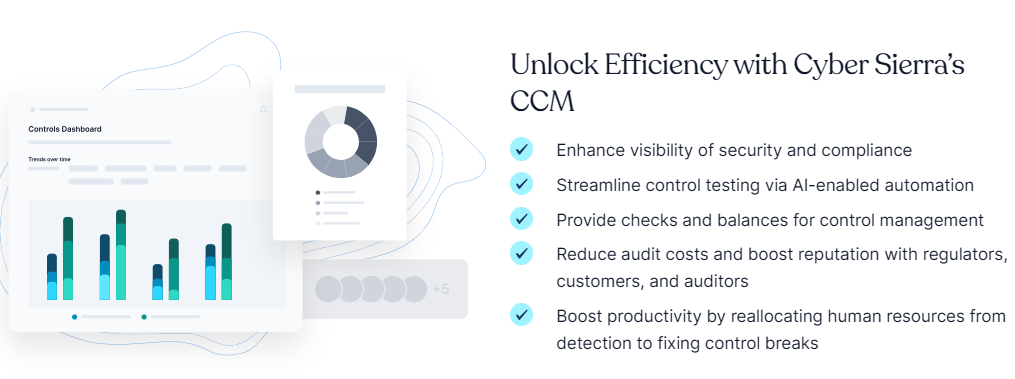
Cyber Sierra can help reduce the chances of human errors and the time required for control monitoring.
The platform automates your controls monitoring process and displays all your controls in a centralized dashboard.
The other way to speed up the process is to prioritize areas with the highest risk and greatest impact on compliance.
How Much Does NIST Certification Cost?
Again, the cost you can expect to incur for your NIST certification varies depending on the factors we highlighted above: organization size and complexity, current security posture, and resource availability.
For instance, for small organizations with fewer requirements, the NIST certification cost can be a few thousand dollars. On the other hand, it can cost several hundred thousand dollars for larger organizations with complex IT infrastructures.
To put this into perspective, you can expect to spend anywhere from $5,000 to $100,000 to get NIST certified.
To understand the cost you can expect to incur to attain NIST certification, conduct a detailed cost-benefit analysis.
Over to You
Granted, becoming NIST certified isn’t a simple process. There is a lot of preparation to be done and steps to follow. But leveraging the right tools like Cyber Sierra and establishing processes, you can accelerate the entire process.
The platform automates monitoring controls enabling you to identify what you need to meet NIST compliance.
Schedule a demo now to see how Cyber Sierra can streamline your TPRM processes. Our platform effectively mitigates third-party risks so you can focus on driving business growth through strategic partnerships.
FAQs
1. Why is NIST 800-171 compliance important?
NIST 800-171 compliance is crucial for organizations handling Controlled Unclassified Information (CUI) within non-federal systems.
Compliance ensures the protection of sensitive information from cyber threats by providing a standardized set of security controls. This framework helps organizations reduce the risk of data breaches, which can lead to financial loss, reputational damage, and legal implications.
For businesses involved with the U.S. government or its contractors, adherence to NIST 800-171 is often mandatory to secure and maintain contracts. This requirement highlights the trust and assurance in an organization’s cybersecurity posture, demonstrating its commitment to safeguarding critical information.
Additionally, compliance with NIST 800-171 enhances overall cybersecurity practices, which can mitigate risks from cyber-attacks and improve resilience against emerging threats, ultimately fostering trust among partners and clients.
2. Which is better: ISO or NIST?
Choosing between ISO (International Organization for Standardization) and NIST (National Institute of Standards and Technology) frameworks depends on organizational needs and regulatory environments.
ISO, particularly ISO/IEC 27001, offers a global standard for information security management systems, suitable for international compliance and recognized worldwide. It provides a holistic approach to managing security risks with a focus on continuous improvement.
NIST, notably NIST Special Publication 800-53 and 800-171, is often preferred in the U.S. for its detailed, prescriptive guidelines tailored to protecting federal information systems and sensitive data.
NIST frameworks are particularly valuable for organizations interacting with U.S. government entities or contractors due to their specificity and relevance to federal compliance requirements.
For organizations aiming for international reach and recognition, ISO might be more suitable, whereas those dealing with U.S. federal data or contracts may find NIST guidelines more applicable.
Both frameworks can complement each other, with many organizations adopting a blend to meet diverse regulatory and operational needs.
3. What does NIST compliance mean?
NIST compliance signifies adherence to the security guidelines and controls outlined by the National Institute of Standards and Technology .
This compliance involves implementing practices and controls designed to protect sensitive information from cyber threats and vulnerabilities. It typically pertains to frameworks such as NIST SP 800-53, which outlines controls for federal information systems, and NIST 800-171, which focuses on protecting Controlled Unclassified Information (CUI) in non-federal systems.
Achieving NIST compliance involves rigorous assessments and audits to ensure that security measures align with NIST’s detailed standards.
For businesses, especially those engaged in federal contracts or handling sensitive data, demonstrating NIST compliance is often a prerequisite for eligibility and can enhance trust with clients by showcasing a robust cybersecurity posture.
4. Do NIST certificates expire?
NIST does not issue certificates directly; instead, compliance with NIST standards like 800-53 or 800-171 is typically demonstrated through audits and assessments conducted by external or internal auditors.
While NIST itself does not provide certificates, organizations that assess compliance often issue reports or attestations of adherence to NIST guidelines. These assessments have a validity period, usually determined by the regulatory requirements or organizational policies.
Typically, periodic reassessments are necessary to maintain compliance due to evolving security threats and updates to the standards. Therefore, while there isn’t a formal NIST certificate with an expiration date, the ongoing validity of compliance requires continuous monitoring, regular audits, and updates to security practices per the latest NIST guidelines.
5. What is NIST Special Publication 800-171?
NIST Special Publication 800-171 provides a set of guidelines for protecting Controlled Unclassified Information (CUI) in non-federal systems and organizations.
This publication outlines 14 families of security requirements, including access control, incident response, and system integrity, designed to safeguard sensitive information from unauthorized access and cyber threats.
Developed by the National Institute of Standards and Technology (NIST), the framework ensures that non-federal entities, such as contractors and third-party vendors working with federal agencies, adhere to robust security practices to protect CUI.
The requirements aim to enhance the security posture of organizations by establishing a baseline for protecting data confidentiality and integrity, thereby reducing the risk of data breaches and unauthorized disclosures.
Compliance with NIST 800-171 is often mandatory for entities involved in federal contracts, ensuring standardized protection of sensitive information across various sectors.
Srividhya Karthik is a seasoned content marketer and the Head of Marketing at Cyber Sierra. With a firm belief in the power of storytelling, she brings years of experience to create engaging narratives that captivate audiences. She also brings valuable insights from her work in the field of cybersecurity and compliance, possessing a deep understanding of the challenges and pain points faced by customers in these domains.
Find out how we can assist you in
completing your compliance journey.