The Complete Guide to a Successful GRC Implementation
Successful GRC implementation ensures organizations manage risks proactively and comply with all government laws and regulations while operating ethically for improved growth. Implementing a robust GRC program not only helps in managing risks effectively and ensuring compliance but also improves overall corporate governance.
But if you’re starting on your GRC journey, where do you begin?
Because the GRC implementation can be complex especially for large organizations that have complex regulatory requirements. That’s why we created this blog post.
This guide delves into the practical GRC implementation steps, the benefits of the program, as well as challenges organizations face during the process.
We’ll also explore some of the best practices for implementing an effective GRC program and how Cyber Sierra can help streamline the implementation process.
But before that, here are the key takeaways:
Key takeaways
- GRC implementation is the process of integrating Governance, Risk, and Compliance into an organization, aligning business goals, and ensuring compliance with regulations.
- Implementing a GRC program enhances decision-making, increases transparency, improves team collaboration, and provides a competitive advantage by effectively managing risks.
- Successful GRC implementation involves assessing benefits, identifying implementation areas, selecting the right tools, creating a roadmap, engaging stakeholders, conducting the implementation process, and ongoing monitoring.
- Challenges organizations face when implementing GRC include navigating complex regulatory environments, finding suitable GRC tools, integrating data across departments, and ensuring user adoption through training.
What is GRC Implementation?
GRC implementation is the process of integrating Governance, Risk, and Compliance procedures and policies into an organization. It helps align business goals, manage risks, and ensure compliance with regulations.
Successful GRC implementation provides a framework for managing policies, procedures, and risks efficiently.
The GRC implementation process begins with assessing the organization’s needs, defining objectives, and selecting the right GRC tools or software. It involves establishing clear governance structures, identifying risks, and ensuring compliance with legal standards.
During the implementation process, organizations establish policies and workflows to monitor performance and control risks.
Overall, effective GRC implementation enhances transparency, reduces silos, and ensures organizations make informed decisions.
GRC Implementation Benefits
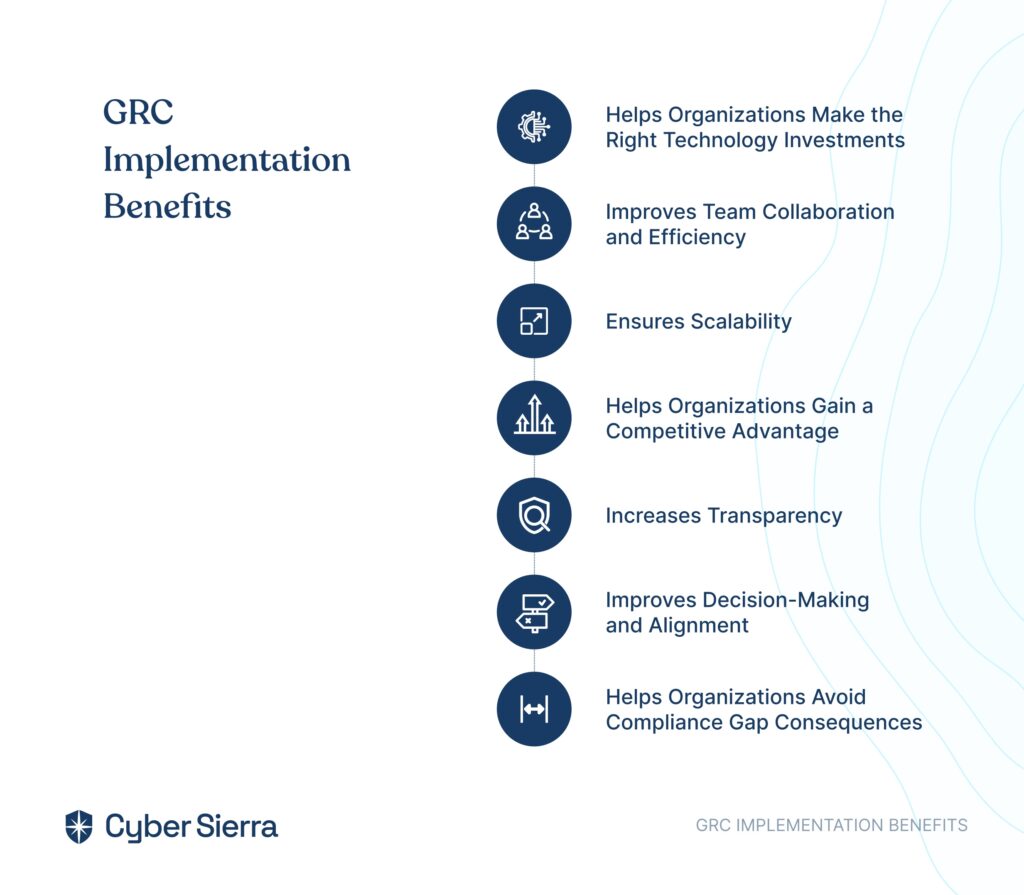
Apart from helping organizations manage risks effectively and comply with government regulations, implementing the GRC program can support sustainable growth and success. Additionally, having a robust GRC program in place has various benefits such as:
1. Helps Organizations Make the Right Technology Investments
One of the key benefits of a GRC program is that it guides organizations in making informed technology investments by aligning them with risk management and compliance goals. It helps evaluate which tools are most suitable for addressing identified risks, thereby ensuring efficient use of resources.
By integrating GRC processes, organizations can prioritize technologies that provide comprehensive governance, risk, and compliance benefits.
This strategic approach helps avoid unnecessary expenditures on incompatible systems and ensures that investments align with long-term business goals. Effective GRC implementation thus not only optimizes costs but also strengthens the organization’s capability to respond to regulatory demands and potential threats.
2. Improves Team Collaboration and Efficiency
Another benefit of implementing a GRC program is it fosters better team collaboration and operational efficiency by unifying risk, compliance, and governance practices. It helps standardize processes that provide a common framework for different departments to work towards shared compliance and risk management goals.
The centralized documentation of policies and procedures facilitates easy access and understanding, reducing silos between teams. Automated workflows streamline compliance tasks, enabling teams to focus on strategic activities instead of repetitive manual processes.
With improved transparency and communication, GRC implementation results in smoother collaboration minimized delays, and a significant boost in overall team efficiency.
3. Ensures Scalability
A GRC program ensures scalability by offering a flexible framework that adapts to organizational growth and evolving regulatory demands. Through effective GRC implementation, organizations can integrate risk and compliance processes that are easily scalable, whether adding new business units or facing increased regulatory scrutiny.
This approach ensures that GRC measures grow in parallel with the organization, providing consistent oversight without additional complexity.
The standardized processes and automation within the GRC framework make it easier to extend compliance initiatives while ensuring alignment with corporate goals.
Ultimately, GRC implementation enables organizations to maintain efficiency and compliance as they expand.
4. Helps Organizations Gain a Competitive Advantage
Effective GRC implementation helps organizations improve risk resilience and demonstrate proactive compliance, thereby gaining a competitive advantage. By managing risks and regulatory requirements effectively, organizations minimize disruptions and build trust with stakeholders which boosts their reputation.
Furthermore, GRC programs provide insights into risk and opportunity areas which enables quicker response to market changes.
When competitors struggle with compliance or risk-related issues, organizations with robust GRC practices are better positioned to innovate and capitalize on growth opportunities. This strategic edge helps differentiate the organization in the marketplace, enhance customer loyalty, and attract investors who value strong governance.
5. Increases Transparency
GRC implementation increases transparency across all organizational levels by providing visibility into governance, risk, and compliance activities. A centralized GRC framework offers real-time insights into compliance status, risk assessments, and mitigation measures.
This transparency is critical for fostering trust among stakeholders, including executives, employees, regulators, and customers. Clear, accessible reporting makes it easy for stakeholders to understand the organization’s GRC posture, ensuring accountability.
Enhanced transparency not only builds internal confidence but also strengthens external relationships through consistent, honest communication.
6. Improves Decision-Making and Alignment
GRC implementation also enhances decision-making by integrating governance, risk, and compliance data into a unified platform, giving leaders the insights needed to make informed choices.
A well-established GRC program ensures that decisions align with organizational risk appetite and compliance requirements, balancing opportunities with effective risk management. The standardized GRC framework facilitates consistent analysis, enabling executives to evaluate the potential impacts of decisions comprehensively.
This approach ensures alignment across departments, as GRC objectives become central to the business strategy. By providing timely information and risk-based perspectives, a GRC program helps organizations respond proactively and strategically to both opportunities and challenges.
7. Helps Organizations Avoid Compliance Gap Consequences
Another key benefit of GRC implementation is its ability to help organizations avoid the consequences of compliance gaps. Non-compliance can result in severe penalties, financial losses, and reputational damage. According to Statista, organizations have faced fines of over 2.4 billion euros due to non-compliance with general data processing principles.
The good news?
Implementing a GRC framework centralizes compliance activities which enables organizations to continuously monitor regulatory requirements and proactively address any gaps. Besides, GRC tools automate tracking and reporting, reducing the risk of human error while ensuring timely updates. This ensures policies and processes are consistently followed across the organization. This vigilant approach not only keeps the organization compliant but also mitigates risks, ensuring smooth and uninterrupted business operations.
GRC Implementation Steps
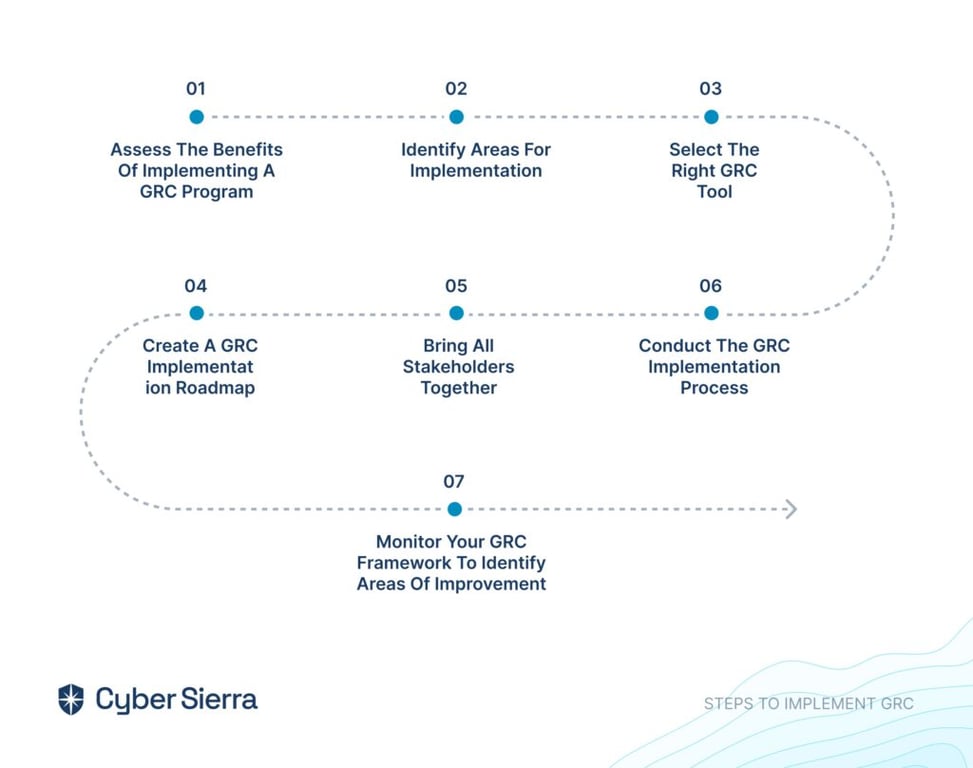
Effective GRC implementations require a well-thought-out process that guarantees success. Here are the seven key steps for implementing an effective GRC (Governance, Risk, and Compliance) program:
Step 1: Assess the Benefits of Implementing a GRC Program
If implementing a GRC framework can’t benefit your organization, then there is no need to waste your time in the process.
A well-defined benefit assessment ensures you focus on strategic areas where GRC can deliver the greatest impact, laying the groundwork for a successful implementation.
Therefore, start by evaluating the specific benefits that a Governance, Risk, and Compliance (GRC) program can bring to your organization. This initial step helps identify how GRC aligns with your business goals, such as enhancing compliance, reducing risks, improving operational efficiency, and achieving regulatory requirements.
A clear understanding of the benefits will guide resource allocation and ensure organizational buy-in. Document these benefits and connect them to key metrics as this will provide a strong foundation for decision-making and help communicate the value of GRC to stakeholders.
Step 2: Identify Areas for Implementation
The next step for effective GRC implementation is to identify the areas of your organization that will benefit most from the GRC program. This will ensure a focused and effective rollout. Evaluate your organization’s existing processes, departments, and functions that require stronger compliance or risk management practices.
Look into areas prone to regulatory risks, cybersecurity threats, or operational inefficiencies. Define where governance improvements can bring the greatest value. This prioritization will help to create a roadmap for where to start, ensuring the GRC initiative is tailored to address your organization’s unique challenges and requirements.
Selecting the right tool is a critical step in GRC implementation. Choosing the right tool not only helps in effectively managing risks and compliance but also simplifies the integration process, reducing potential challenges.
The software you choose should align with your specific business needs, scale with your growth, and integrate with existing systems.
When choosing a GRC solution, evaluate features such as automation capabilities, reporting tools, and adaptability to different compliance requirements. Consider user-friendliness to ensure that employees can effectively use the system.
Make sure you invest time in comparing vendors, reviewing demos, and gathering feedback to ensure the selected tool will effectively support your GRC goals.
Step 4: Create a GRC Implementation Roadmap
Creating a GRC implementation roadmap involves outlining a structured plan for deploying the GRC framework effectively.
Start by defining key milestones, tasks, responsibilities, and timelines to keep the process on track. This roadmap should include communication strategies to ensure stakeholders understand the implementation’s progress and their role. A detailed timeline helps ensure that each phase is completed methodically and that potential risks are mitigated proactively.
Make the implementation roadmap clear and provide a step-by-step process for all involved to ensure the implementation remains organized and moves toward successful completion.
Also, your roadmap should be flexible enough to accommodate changes and address unforeseen challenges during implementation.
Step 5: Bring All Stakeholders Together
Successful GRC implementation requires collaboration from all relevant stakeholders, including leadership, department heads, IT, legal, and compliance teams.
Bring all stakeholders together to ensure everyone is aligned on the objectives, scope, and benefits of the GRC initiative.
As well, communication is key so make sure everyone understands the impact on their specific areas of responsibility and how they can contribute. Stakeholder engagement also helps in identifying potential obstacles early and finding collective solutions. Establish regular meetings and transparent communication channels to keep stakeholders informed.
Step 6: Conduct the GRC Implementation Process
Once you have completed all the steps above, it’s time to get into the actual process.
A thorough and well-managed implementation ensures the GRC tool performs as intended, helping the organization streamline compliance and risk management.
The actual GRC implementation process involves deploying the chosen GRC software, integrating it with existing systems, and configuring workflows to align with organizational needs.
Start by setting up policies and assigning roles and responsibilities within the GRC tool. Provide adequate training to users to ensure they understand the features and how to utilize the platform effectively. Address any issues that arise during deployment, and test the system for reliability and functionality as well. This step should also involve validating compliance with applicable regulations.
Step 7: Monitor Your GRC Framework to Identify Areas of Improvement
Once the GRC framework is operational, continuous monitoring is essential for maintaining effectiveness and adapting to changes.
Consistent monitoring and iterative improvements will keep your GRC program efficient, relevant, and effective.
Track key performance indicators (KPIs) to evaluate how well the GRC program meets its objectives. Identify areas that require adjustments, whether related to compliance processes, risk management practices, or system functionalities.
Monitoring allows you to pinpoint gaps and act proactively, ensuring the GRC system evolves alongside regulatory changes and business needs. Conduct regular reviews to fine-tune policies and adapt strategies. This is vital for long-term success.
Common Challenges While Implementing a GRC Program
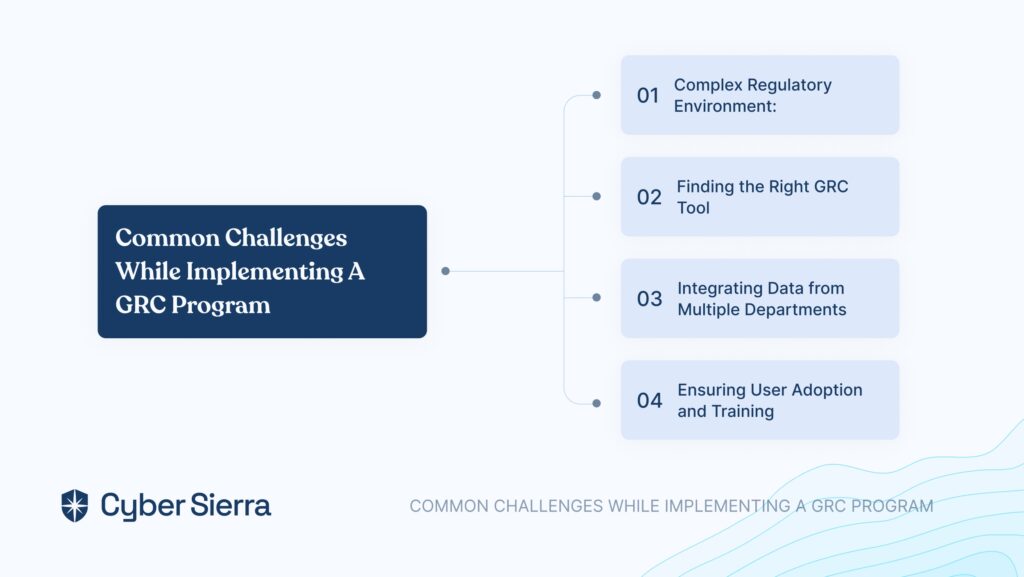
While there are numerous benefits in implementing a GRC framework, organizations may face challenges such as a complex regulatory environment, finding the right tool, and more. Let’s explore each challenge in-depth.
- Complex Regulatory Environment: Navigating a complex regulatory environment can be challenging when carrying out GRC implementation. Organizations must comply with numerous and often conflicting regulations, which vary across industries and geographies. Keeping up-to-date with changing compliance requirements demands resources and expertise which increases the risk of regulatory gaps and non-compliance.
- Finding the Right GRC Tool: Selecting the right GRC tool is crucial but challenging as well. The market is flooded with numerous tools, each offering different features. Organizations struggle to choose a solution that fits their needs, integrates seamlessly with existing systems, and scales with business growth, which can hinder effective GRC adoption.
- Integrating Data from Multiple Departments: Integrating data from various departments is a major challenge in GRC programs. Different departments often use disparate systems and data formats, leading to inconsistencies. Consolidating this data into a cohesive framework demands careful planning and technology, requiring significant time and resources for effective integration.
- Ensuring User Adoption and Training: Ensuring user adoption and adequate training is a significant challenge when implementing GRC programs. Employees may resist change or find new processes complex. Without effective training and clear communication, organizations risk low engagement, which affects the overall success of GRC initiatives and leads to compliance gaps.
GRC Implementation Best Practices
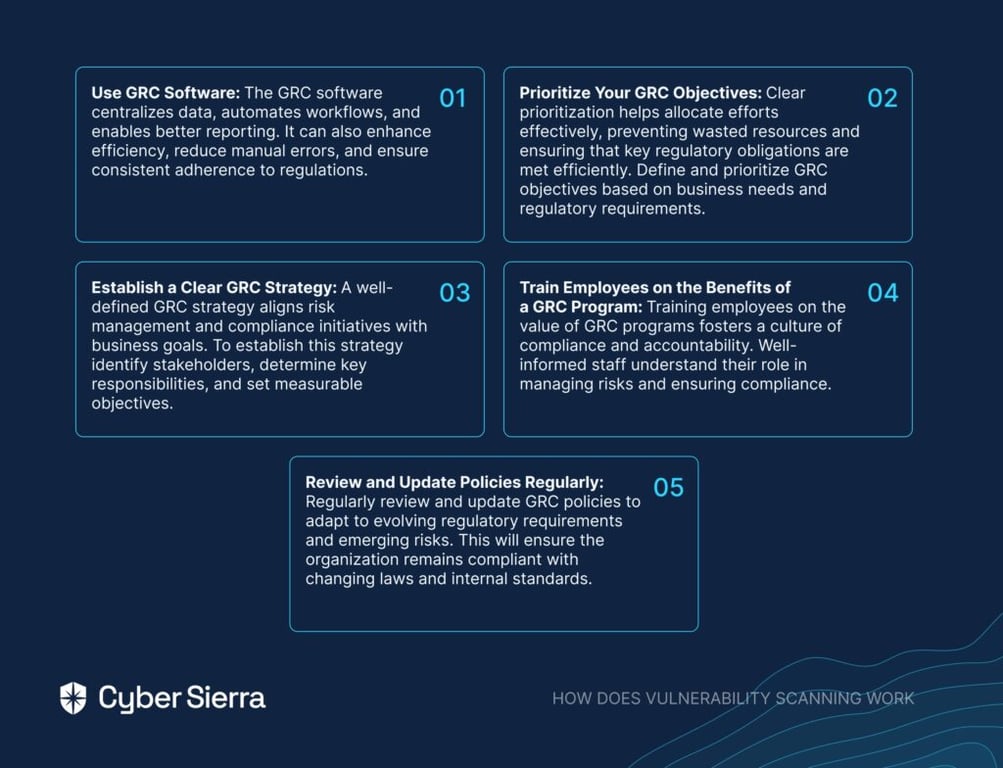
When implementing a GRC framework, follow these best practices to ensure successful implementation:
- Use GRC Software: To effectively implement a GRC program, use GRC software to streamline governance, risk, and compliance processes. The GRC software centralizes data, automates workflows, and enables better reporting. It can also enhance efficiency, reduce manual errors, and ensure consistent adherence to regulations.
- Prioritize Your GRC Objectives: Clear prioritization helps allocate efforts effectively, preventing wasted resources and ensuring that key regulatory obligations are met efficiently. Define and prioritize GRC objectives based on business needs and regulatory requirements. This ensures that your organization focuses its resources on the most critical risks and compliance areas.
- Establish a Clear GRC Strategy: A well-defined GRC strategy aligns risk management and compliance initiatives with business goals. To establish this strategy identify stakeholders, determine key responsibilities, and set measurable objectives. A clear GRC roadmap provides direction, ensuring all teams understand how compliance and risk management integrate with the organization’s overall mission.
- Train Employees on the Benefits of a GRC Program: Training employees on the value of GRC programs fosters a culture of compliance and accountability. Well-informed staff understand their role in managing risks and ensuring compliance, which leads to better adherence to policies. Invest in continuous education to help employees recognize risks proactively and make the entire GRC program more effective and resilient.
- Review and Update Policies Regularly: Regularly review and update GRC policies to adapt to evolving regulatory requirements and emerging risks. This will ensure the organization remains compliant with changing laws and internal standards. Routine policy updates also help in mitigating new risks and maintaining operational efficiency by addressing gaps proactively.
Use Cyber Sierra for GRC Implementation Automation
While there are many GRC tools for streamlining GRC implementation, Cyber Sierra stands out among all.
The AI-enabled platform streamlines the entire implementation process by automating Governance, Risk, and Compliance (GRC) processes and integrates GRC workflows. It offers pre-configured frameworks, automated compliance checks, and customizable risk assessments, enabling organizations to meet regulatory requirements efficiently and accurately.
Some of the key features of Cyber Sierra include:
- Automated Compliance Workflows: Automates regulatory requirements, helping organizations adhere to standards like ISO 27001, GDPR, and more.
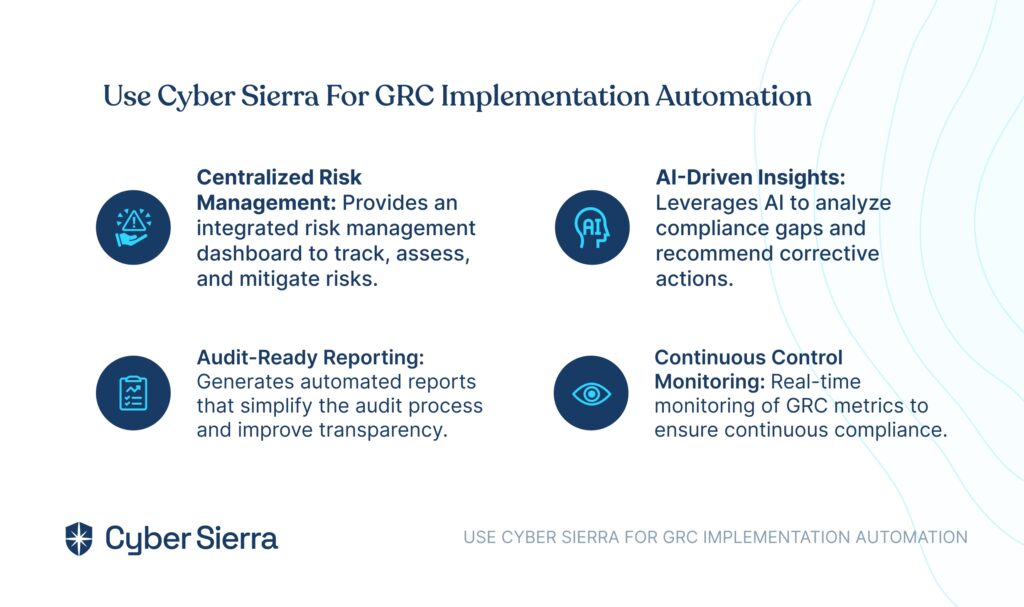
- Centralized Risk Management: Provides an integrated risk management dashboard to track, assess, and mitigate risks.
- AI-Driven Insights: Leverages AI to analyze compliance gaps and recommend corrective actions.
- Continuous Control Monitoring: Real-time monitoring of GRC metrics to ensure continuous compliance.
- Audit-Ready Reporting: Generates automated reports that simplify the audit process and improve transparency.
Schedule a free demo to see how Cyber Sierra can help you streamline GRC implementation.
FAQ
1. What are the GRC implementation steps?
The main steps in implementing an effective GRC program include, assessing the benefits of implementing a GRC program, identifying areas for implementation, selecting the right GRC tool, creating a GRC implementation roadmap, bringing all stakeholders together, conducting the GRC implementation process, then monitoring your GRC framework to identify areas of improvement.
2. What are the key factors for successful GRC implementation?
For successful implementation of Governance, Risk, and Compliance (GRC), several key factors are essential including:
- Tailored framework: Customize the GRC framework to align with your organization’s specific needs, ensuring it addresses industry requirements and risk profiles.
- Regular reviews: Continuously assess and update GRC policies to adapt to evolving regulations and business changes.
- Employee training: Invest in comprehensive training programs to cultivate a culture of compliance and risk awareness among staff.
- Technology selection: Choose integrated GRC software that can streamline processes and improve collaboration across departments.
These factors are crucial for enhancing compliance, managing risks, and achieving overall organizational success.
3. What are the successful GRC frameworks?
The most recognized GRC frameworks in the industry include ISO 31000, NIST Cybersecurity Framework, COBIT (Control Objectives for Information and Related Technologies), and COSO ERM Framework.