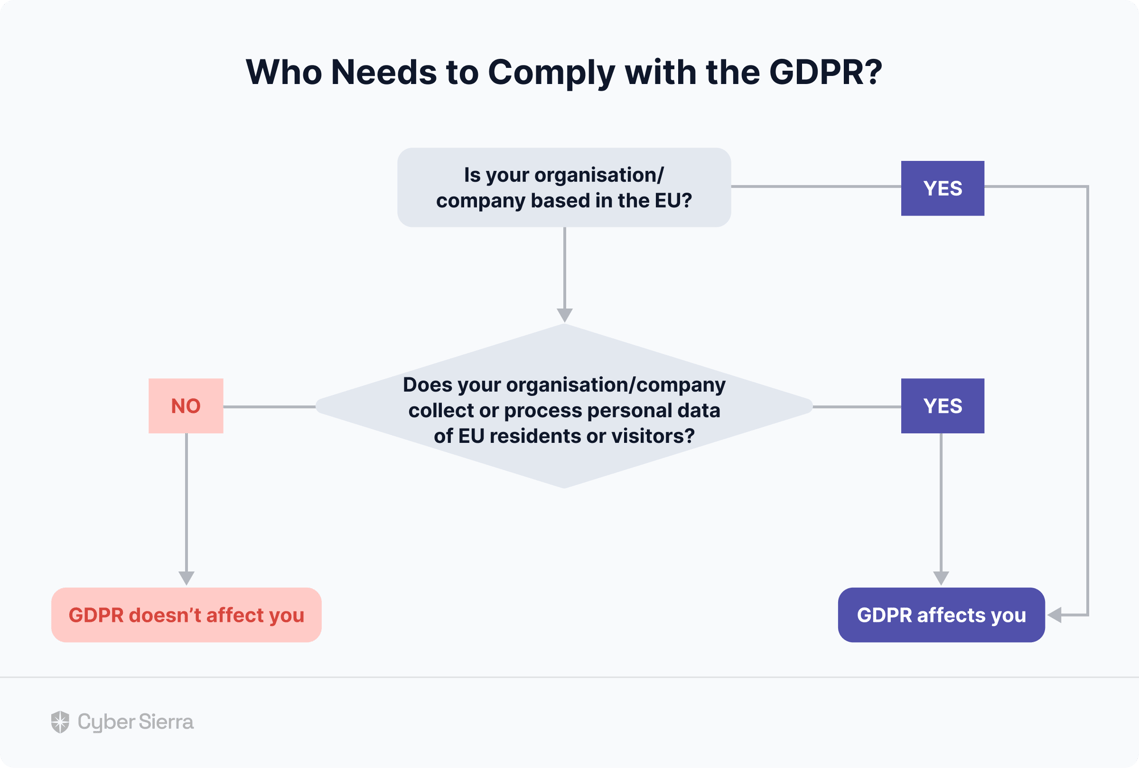
Does GDPR, an EU law, even apply to you?
Organizations outside of Europe might ask this question. So before jumping into the checklist, here’s to re-clarify who must comply with the General Data Protection Regulation (GDPR):
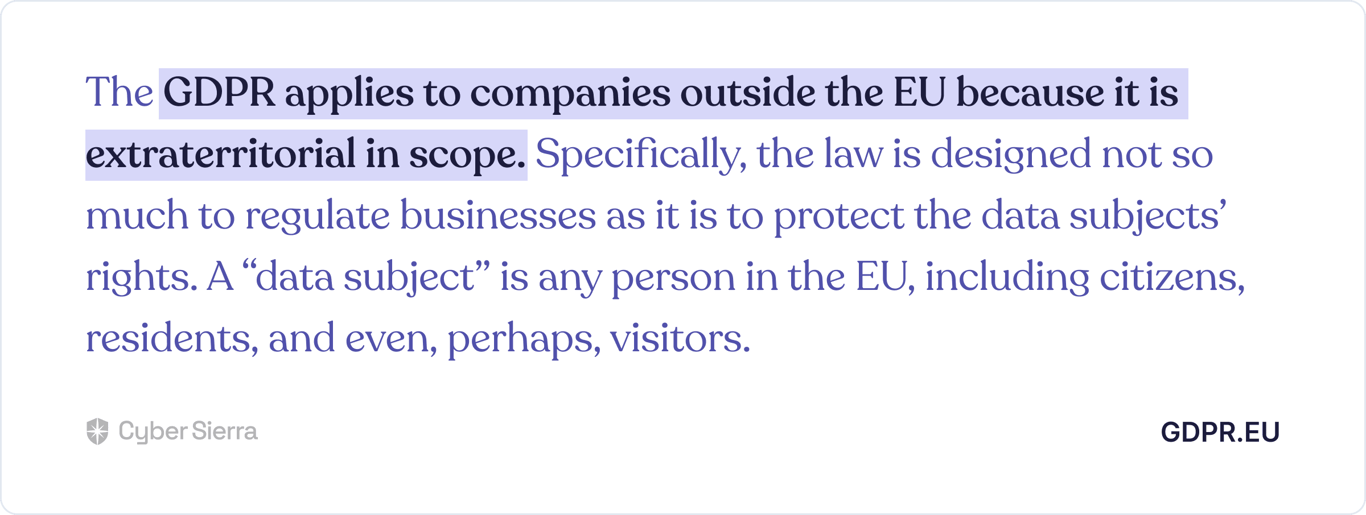
Explaining further, the GDPR’s official site notes:
And now, the GDPR Cyber security checklist guide.
1. Map All Collected & Processed Data
The first step for becoming compliant with GDPR is taking a holistic inventory of all the data your company collects or processes.
Three things you should do here are:
- Identify all databases, applications, networks, etc., within your organization.
- Document all collected, processed, and stored personally identifiable information (PII) in those mapped systems.
- Outline who has access to each mapped data (i.e., employees or third-party vendors, partners, etc.)
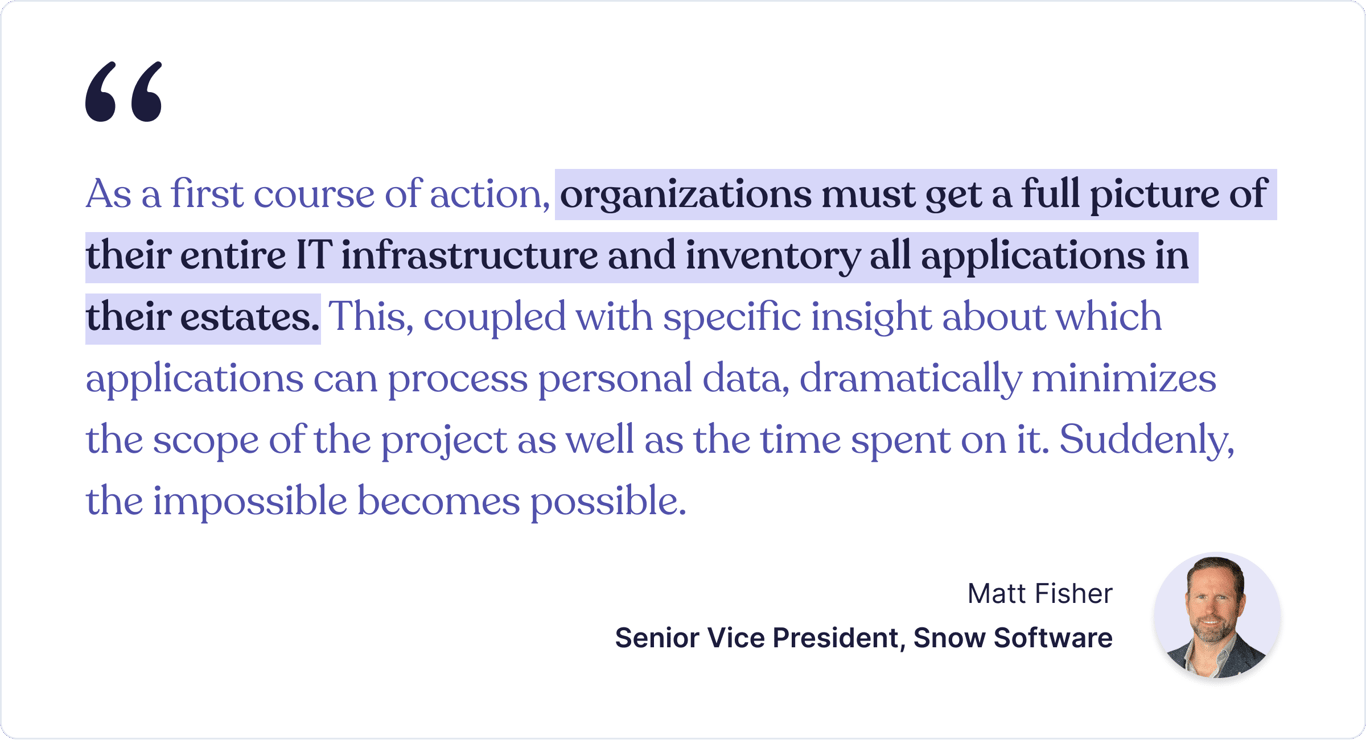
These actions create a birds-eye view of all personal data your company collects, stores, or processes. Matt Fisher, an IT thought leader, shared why this first step is crucial for simplifying the entire project of becoming GDPR-compliant.
In his words:
2. Document Justification for Data Processing
Collecting, storing, or processing personal data is illegal under the GDPR law. Therefore, all companies must justify why they are doing so, subject to one or more conditions listed in GDPR’s Article 6.
So as a 2nd step, create a process that documents your company’s justification for processing personal data. This should include a lawful basis for processing data approved by the GDPR such as:
- Consent given by the data subject, where the data subject is the owner of the data.
- Contract entered with the data subject.
- Necessary for fulfilling a legal obligation.
- Necessary for protecting the interests of the data subject or an associated third party.
- Necessary for legitimate purposes pursued by the data controller (i.e., the organization collecting data) or associated third parties.
Next, add a consent box to all forms and switch to double opt-ins to ensure you only collect data with expressed consent. Then, create (or recreate) and publish your company’s privacy policy. In it, provide clear information on how you process data and justify why.
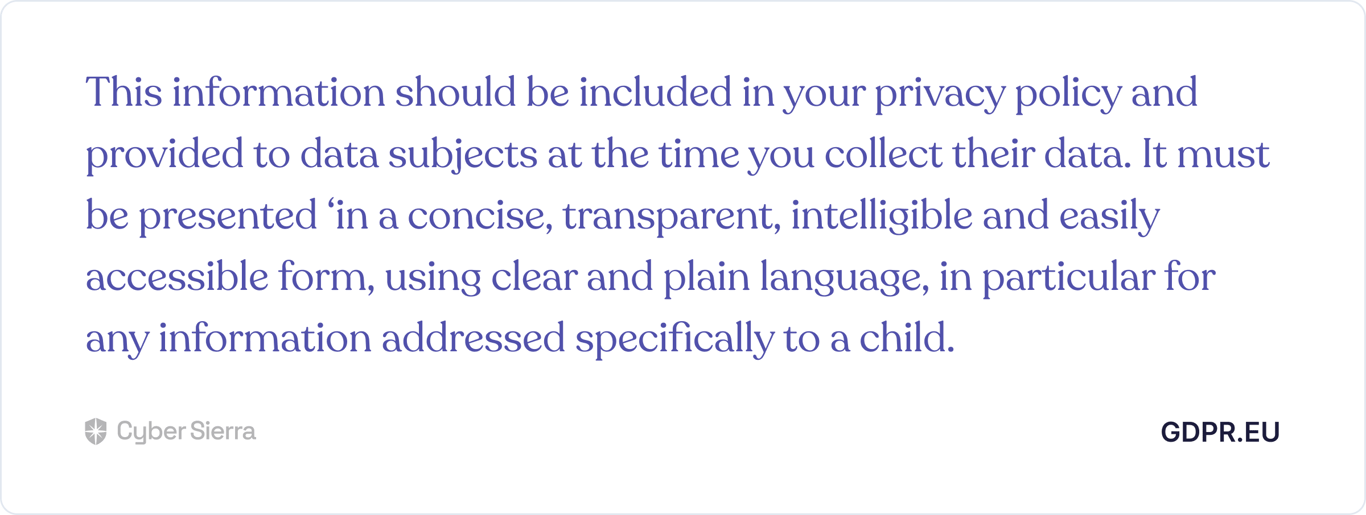
According to the GDPR’s official site:
A data protection impact assessment uncovers how your product could jeopardize the personal data your company collects, stores, or processes. This step also helps you identify risks associated with personal data being processed.
Consider using a cybersecurity suite to effortlessly achieve both. Fortunately, this is one area where the Cyber Sierra interoperable cybersecurity and gdpr compliance automation platform comes in.
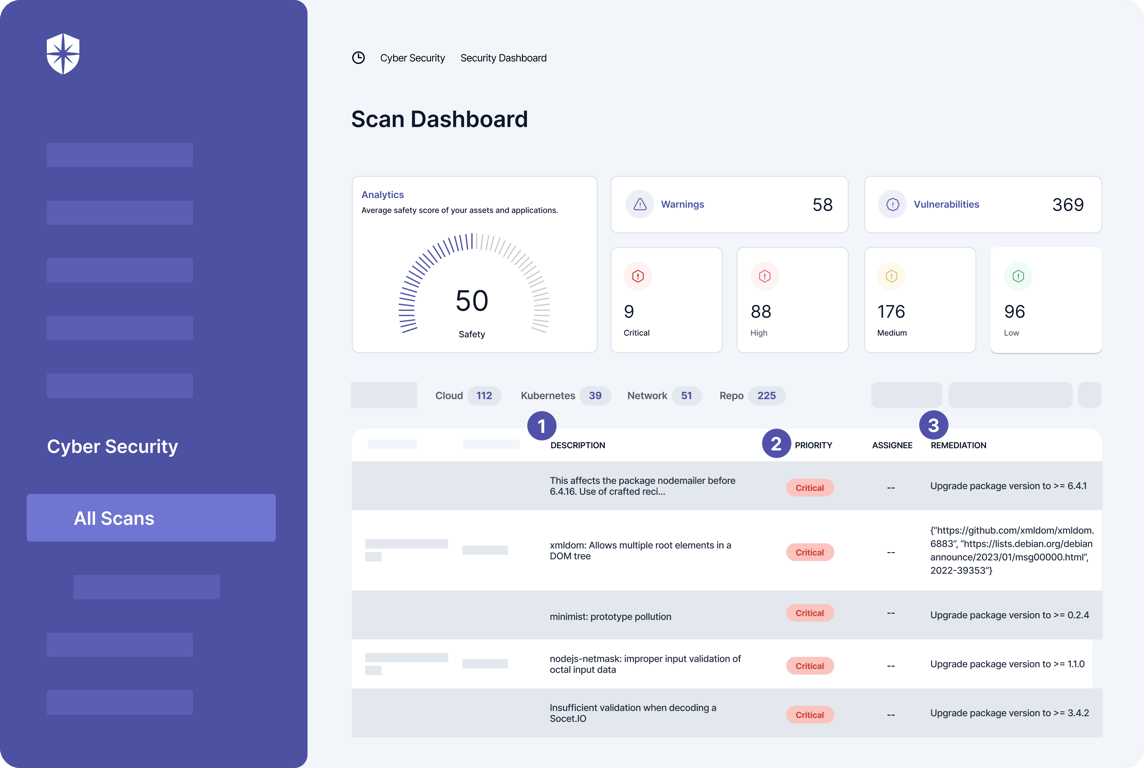
For instance, connect your cloud assets, network systems, etc., and our cybersecurity suite will scan everywhere your company collects, stores, or processes data.
You get a Scan Dashboard with:
- Descriptions of all identified risks and vulnerabilities across everywhere your company collects, stores, or processes data.
- Critical risks to personal data identified and prioritized.
- Ability to assign identified threats to teammates with summarized remediation tips for mitigating risks:
4. Appoint a Data Protection Officer (DPO)
If the steps above look overwhelming, it’s because they are.
Hence, this official statement:
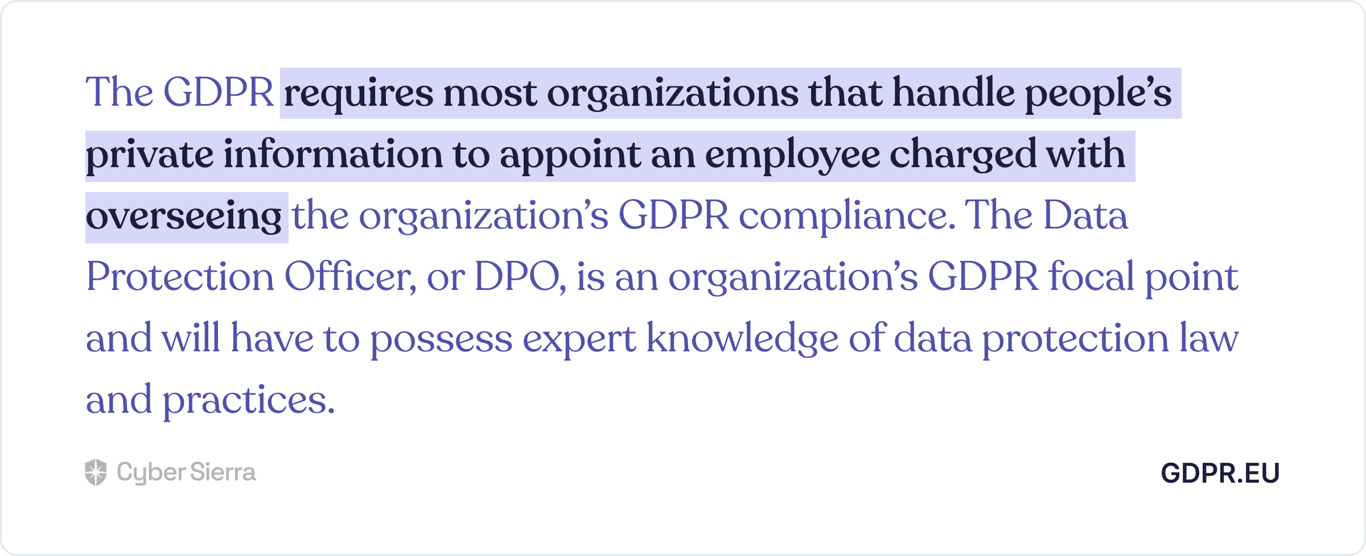
In addition to overseeing the steps up to this point, a DPO eases you of responsibilities outlined by the GDPR law.
Some crucial ones are:
- Respond to comments and questions from data subjects related to how your company processes their personal data.
- Cooperate with the data protection supervisory authority and inform executives and employees of their GDPR obligations.
- Continuously monitor your organization’s GDPR processes and maintain documentation to prove compliance.
- Train employees on compliance and perform ongoing audits.
Before we proceed…
Imagine your appointed data protection officer (or maybe, you) could continuously monitor your company’s GDPR compliance and train employees from one place. As you’ll soon see, you can do both with Cyber Sierra’s cybersecurity and compliance automation platform.
5. Launch Ongoing Employee Awareness Training
Punit Bhatia, author of ‘Be Ready for GDPR,’ advised:
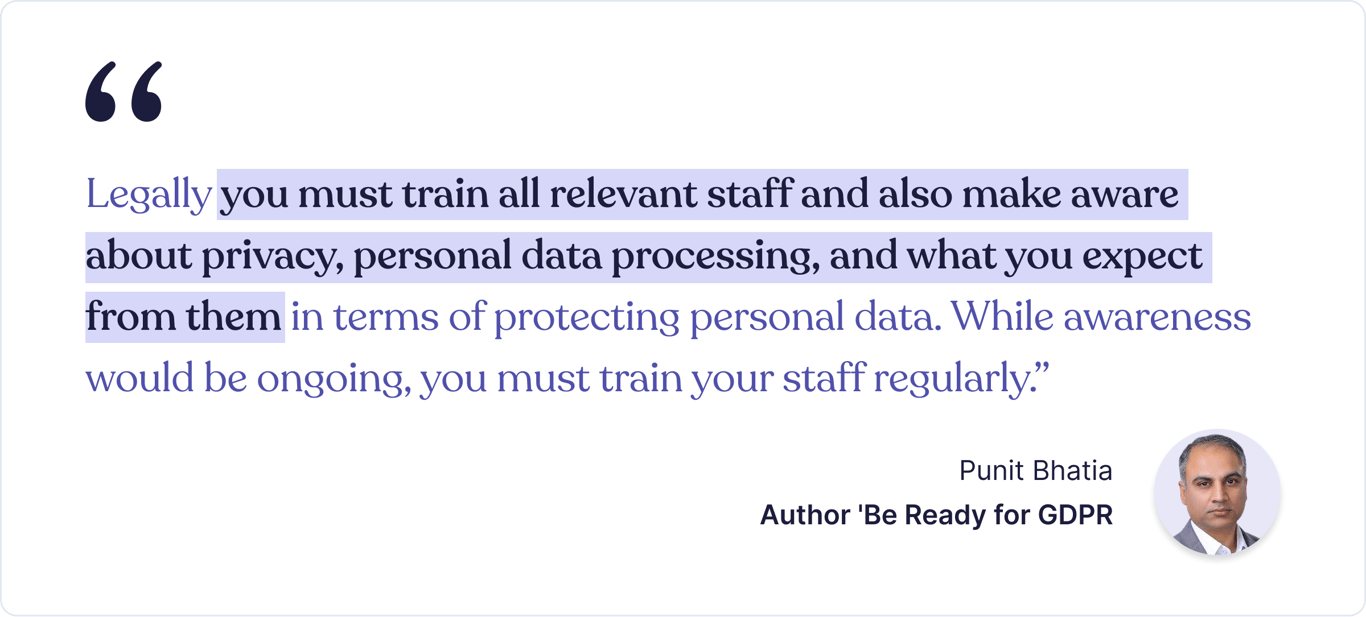
Punit is spot on because, as you can imagine, implementing and maintaining the GDPR law is complex. Therefore, regular data privacy training is needed to help employees handle personal data securely.
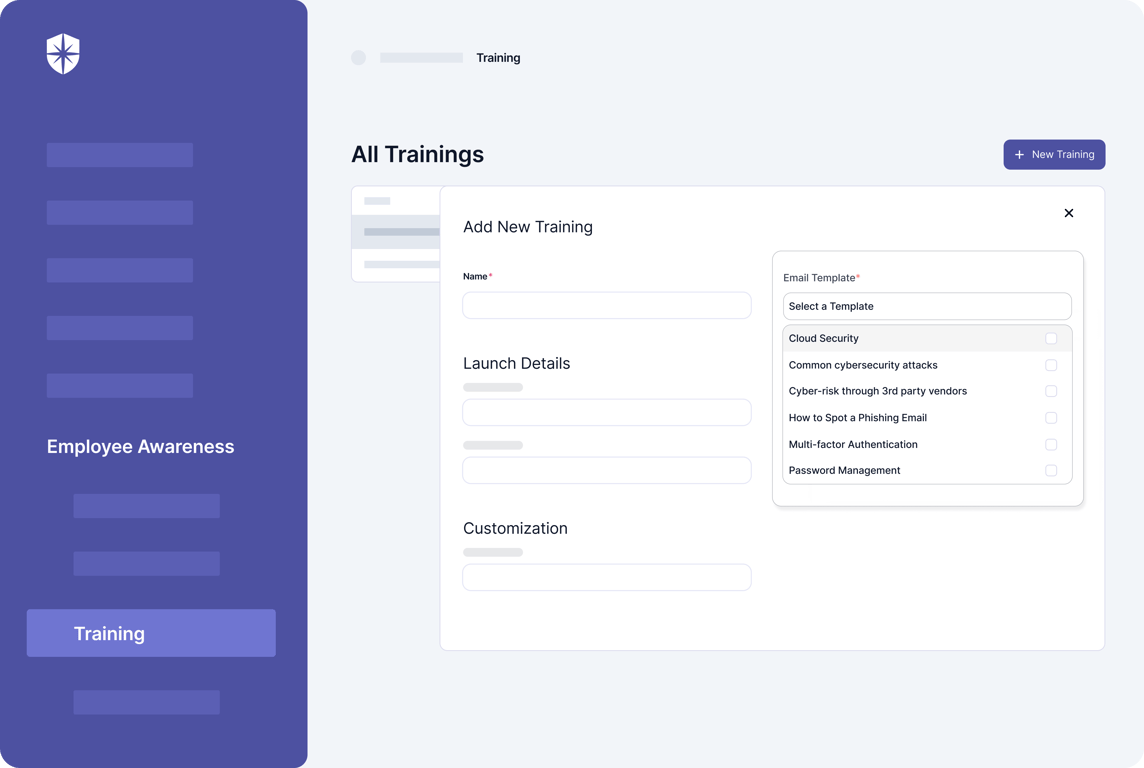
Ticking off this crucial step of the GDPR compliance process is easy with Cyber Sierra. You can launch, track completion, and manage ongoing employee security training necessary for implementing GDPR procedures and staying compliant from the same place.
Here’s a peek: