Compliance Automation: How to Streamline It?
As the regulatory environment becomes increasingly complex, with authorities constantly introducing new laws and regulations, relying on manual methods to manage compliance can be time-consuming and prone to human error.
Organizations that rely on outdated mechanisms for security compliance are more likely to face non-compliance issues that can result in hefty fines and penalties.
In September 2024 alone, over € 4 billion were imposed on organizations for non-compliance with general data processing principles.
To avoid this, forward-thinking organizations are embracing compliance automation.
In this blog post, we’ll cover everything you need to know about compliance automation.
We’ll start by explaining what compliance automation is and how it works. We’ll then explore the different types of compliance automation, examples, and how to automate the compliance process for your organizations.
Lastly, we’ll discuss the benefits of compliance automation and show you how CyberSierra’s AI-enabled cybersecurity platform can help you streamline the process.
Let’s get started.
Key takeaways:
- Compliance automation involves the use of technology to streamline the process of meeting regulatory compliance standards, such as HIPAA and PCI DSS.
- Automated compliance minimizes human errors, saves time, and reduces risks associated with compliance management.
- Compliance automation can be categorized into regulatory compliance, which adheres to established legal standards to protect sensitive data, and corporate compliance, which involves internal controls to ensure adherence to laws and policies. Both are crucial for safeguarding data and maintaining organizational integrity.
- Compliance automation can enhance various areas, including regulatory adherence, security controls, risk management, and audit trail management.
What Is Compliance Automation?
Compliance automation is the process of using technology to streamline and automate the process of complying with regulatory standards like HIPAA, SOC 2, ISO 27001, and PCI DSS. Instead of relying on manual checks, compliance automation tools automate tasks like monitoring, reporting, and auditing, making it easier for businesses to stay compliant.
The best compliance automation software helps organizations reduce errors, save time, and minimize risks. It does this by continuously tracking compliance activities, identifying gaps, and generating real-time reports. This is particularly important for companies that must adhere to stringent standards, such as HIPAA for healthcare or PCI DSS for payment security.
Compliance automation tools also support SOC 2, MAS TRM, HKMA, CIRMP, and ISO 27001 compliance, making it easier to manage complex requirements and provide evidence during audits.
By automating repetitive processes, these tools ensure that companies remain compliant, freeing up valuable resources for other business activities. Ultimately, compliance automation is essential for efficient, scalable compliance management.
How Does Automated Compliance Work?
Automated compliance works by using compliance automation software to monitor, manage, and enforce regulatory and security standards efficiently. Compliance automation tools streamline processes by continuously collecting and analyzing data to identify risks, ensuring that companies meet requirements without manual intervention.
These automated compliance tools also generate audit-ready reports, handle documentation, and track compliance-related tasks in real-time, significantly reducing the workload of compliance teams.
Compliance automation software also integrates with existing systems, automating activities like risk assessment, data encryption checks, and audit trails, which helps organizations stay ahead of compliance obligations.
By using automation tools, organizations can minimize human errors, ensure data accuracy, and maintain up-to-date compliance with ever-changing regulations. Ultimately, compliance automation not only cuts down on manual effort but also ensures a faster and more reliable way to meet regulatory standards. This helps organizations save time and reduce costs while mitigating risks.
Compliance Automation Types
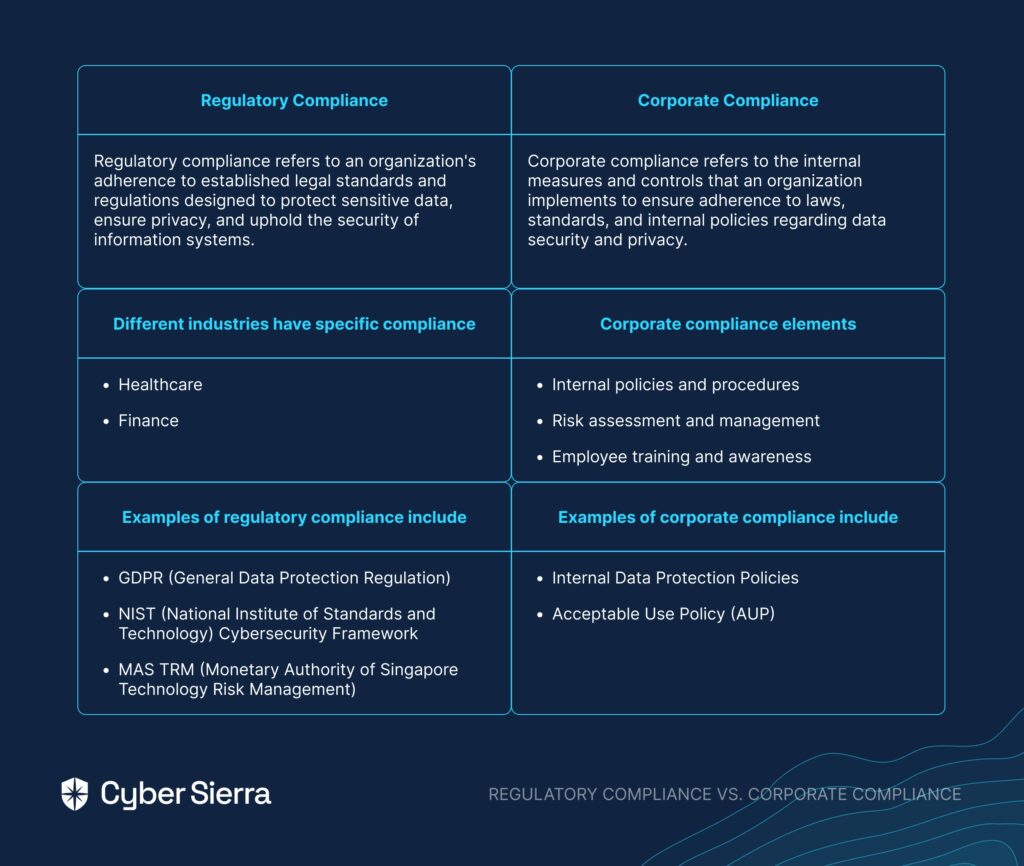
The compliances that can be automated fall under two categories namely regulatory compliance and corporate compliance.
Let’s take an in-depth look into each type:
1. What is Regulatory Compliance?
Regulatory compliance refers to an organization’s adherence to established legal standards and regulations designed to protect sensitive data, ensure privacy, and uphold the security of information systems.
This compliance is crucial to safeguarding individuals’ data, maintaining business continuity, and ensuring that digital practices align with government standards.
Key Elements of Regulatory Compliance
In cybersecurity, regulatory compliance focuses on implementing controls and protocols to secure digital assets, protect sensitive data, and mitigate cyber risks.
This involves regular audits, assessments, risk evaluations, and adherence to specific standards set by regulatory bodies. It is designed to ensure organizations take appropriate steps to prevent unauthorized access, data breaches, and misuse of information.
Different industries have specific compliance regulations such as:
- Healthcare: Organizations in the healthcare industry must comply with the Health Insurance Portability and Accountability Act (HIPAA) to ensure the protection of patients’ electronic health records.
- Finance: Financial institutions and organizations are required to comply with the Gramm-Leach-Bliley Act (GLBA) to protect customers’ financial information, as well as PCI-DSS (Payment Card Industry Data Security Standard) for card payment security.
Examples of regulatory compliance include:
- GDPR (General Data Protection Regulation): GDPR mandates that companies handling the personal data of EU citizens implement adequate measures to protect that data. This includes encryption, data anonymization, and reporting breaches within 72 hours.
- NIST (National Institute of Standards and Technology) Cybersecurity Framework: Many U.S. organizations, especially in critical infrastructure sectors, follow NIST guidelines to manage and reduce cybersecurity risk. This framework helps companies identify and mitigate potential threats through risk-based approaches.
- MAS TRM (Monetary Authority of Singapore Technology Risk Management): MAS TRM outlines best practices for managing technology risks in financial institutions, emphasizing governance, risk assessment, and security measures to protect sensitive data and ensure operational resilience.
Overall, regulatory compliance helps organizations mitigate the risks of data breaches, prevent unauthorized access to systems, and ensure that privacy laws are respected. As a result, organizations can avoid non-compliance issues that may lead to heavy fines, data loss, reputational damage, and potential legal repercussions.
2. What is Corporate Compliance?
Corporate compliance refers to the internal measures and controls that an organization implements to ensure adherence to laws, standards, and internal policies regarding data security and privacy.
It involves establishing internal rules for protecting digital assets, setting access controls, ensuring that employees follow proper procedures, and maintaining compliance with cybersecurity-related legal requirements.
Key Elements of Corporate Compliance
Corporate compliance revolves around the following elements:
- Internal policies and procedures: This involves creating rules and procedures for handling, storing, and sharing data. This may involve data encryption standards, password management policies, and restrictions on access to sensitive data.
- Risk assessment and management: This includes conducting regular risk assessments to identify vulnerabilities within the organization’s digital infrastructure and implementing measures to mitigate them.
- Employee training and awareness: This entails educating employees on best cybersecurity practices, including identifying phishing emails, using secure passwords, and understanding data privacy regulations.
Corporate cybersecurity compliance involves proactive steps to protect company assets and prevent internal vulnerabilities from being exploited by malicious actors.
Examples of corporate compliance include:
- Internal Data Protection Policies: Companies often create internal data security policies that require data encryption, access control measures, and secure password practices. For example, an internal policy might require employees to use multi-factor authentication (MFA) when accessing sensitive systems or data.
- Acceptable Use Policy (AUP): Companies may implement Acceptable Use Policies, specifying how employees should use company devices and handle sensitive information to prevent security incidents. This includes guidelines for internet usage, downloading software, and accessing company data remotely.
Overall, corporate compliance is crucial for preventing data breaches that can result from internal threats, such as insider negligence or intentional misuse of company resources.
By adhering to established cybersecurity practices and procedures, organizations can better safeguard their systems and data, mitigate potential security incidents, and demonstrate their commitment to data protection. Maintaining robust cybersecurity compliance also helps to build stakeholder trust and meet customer expectations regarding data security and privacy.
Compliance Automation Examples
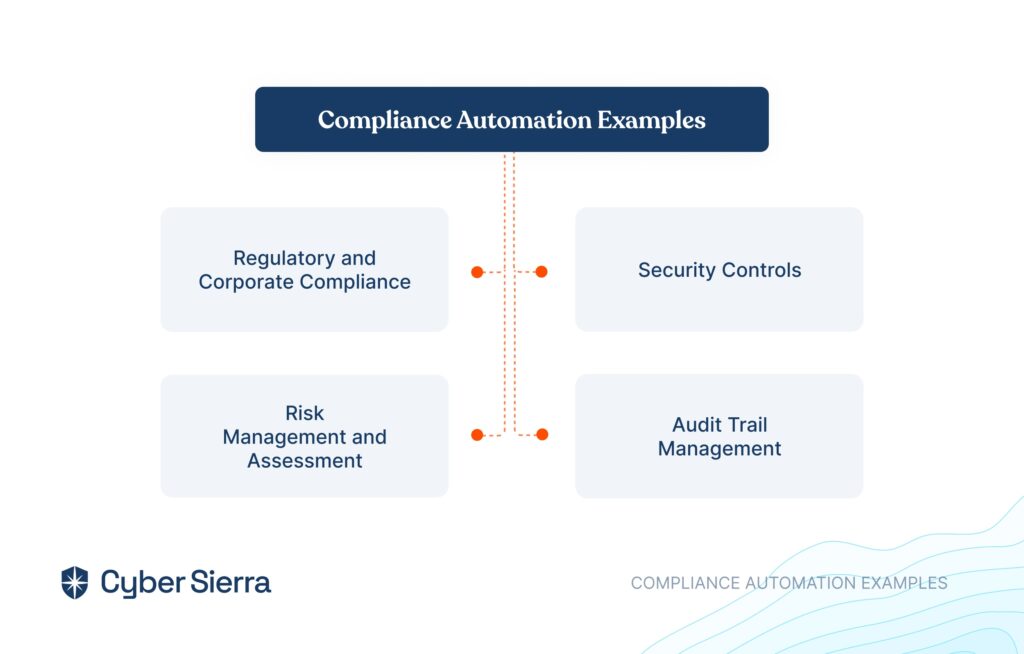
Compliance automation can help organizations streamline operations in different areas such as:
1. Regulatory and Corporate Compliance
Compliance automation can help organizations adhere to regulatory standards like GDPR or HIPAA by automating workflows that track data privacy rules and document regulatory activities. For example, automated compliance software can continuously monitor data handling practices, identify policy deviations, and ensure personal data is processed securely. It also generates real-time compliance reports, simplifying audits. This saves time, reduces human error, and keeps companies up to date with evolving regulations.
2. Security Controls
Security controls are measures to protect systems and data. Compliance automation enhances security by automatically configuring and monitoring security controls. For instance, automated compliance solutions can continuously check that all user accounts have multi-factor authentication (MFA) enabled and enforce the use of strong passwords.
Any configuration drift is automatically flagged and remediated. This ensures security standards are uniformly applied across the infrastructure, reducing vulnerabilities.
3. Risk Management and Assessment
Risk management involves identifying, assessing, and mitigating risks to an organization’s assets. Compliance automation can streamline risk assessments by automatically scanning systems for vulnerabilities, quantifying their impact, and providing recommendations for mitigation. For example, an automated compliance tool can assess system configurations and identify risks of non-compliance, such as missing security patches. This proactive approach helps companies prevent security incidents, enhance data protection, and ensure cybersecurity risk levels remain within acceptable bounds.
4. Audit Trail Management
Audit trails track all system activities, ensuring accountability and traceability. Compliance automation tools can help manage audit trails by automatically capturing and documenting actions taken on critical systems. For example, whenever there are changes to access permissions, an automated system logs the details, stores them securely, and provides easy access during audits.
This helps demonstrate compliance with cybersecurity standards, proving that only authorized users make changes and ensuring there is a clear record of all security-related activities.
How Do You Automate a Compliance Process?
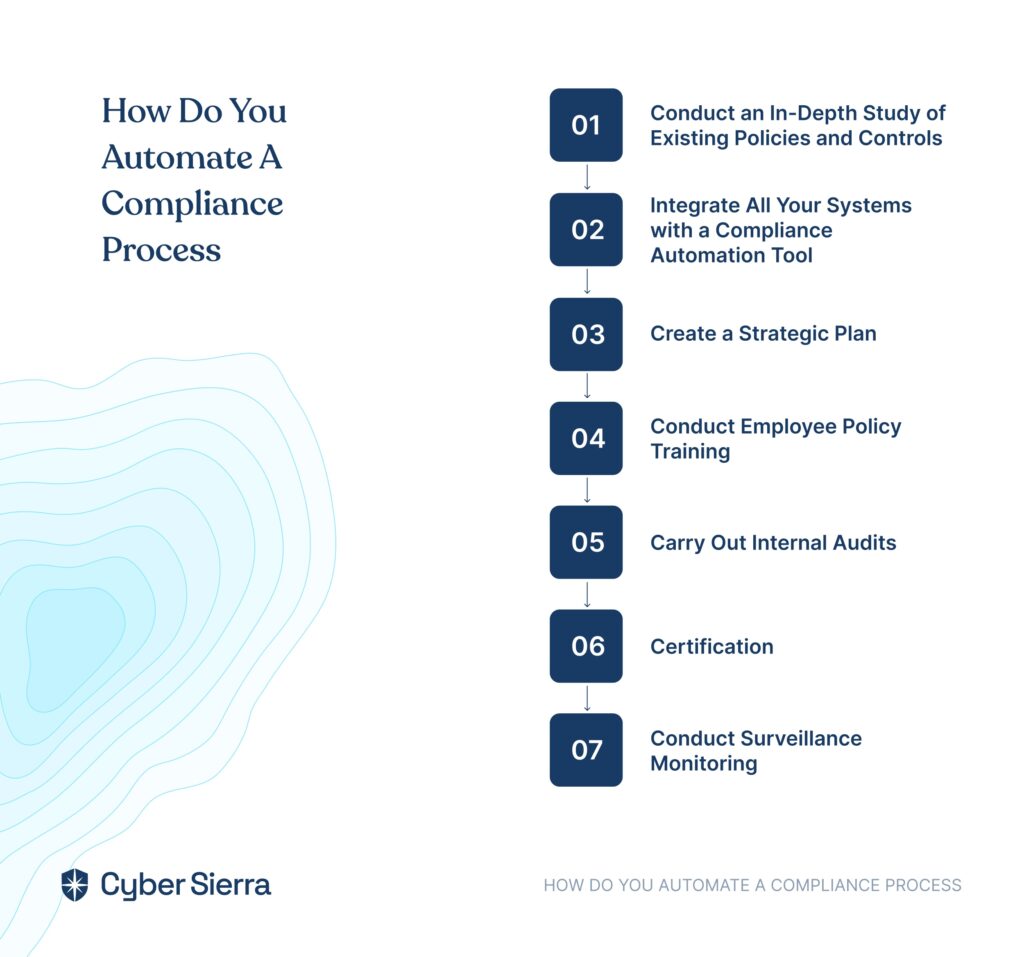
Automating your compliance process involves careful planning and the integration of technology to ensure consistency and accuracy. Here’s a detailed guide on how to automate a compliance process effectively.
1. Conduct an In-Depth Study of Existing Policies and Controls
The first step in automating a compliance process is to understand your existing policies and controls thoroughly. You will need to focus on the following:
- Evaluation of current policies: Assess your current compliance policies to identify gaps or areas for improvement.
- Mapping regulatory requirements: Identify which regulations apply to your industry. This might include GDPR, HIPAA, PCI DSS, or other standards.
- Documentation: Ensure that all current policies and controls are well documented. This helps in evaluating their alignment with regulatory requirements and simplifies the transition to an automated system.
This step is essential to determine which parts of the compliance process can benefit most from automation.
Once you understand the existing policies, the next step is to integrate your systems with a compliance automation tool to streamline workflows, centralize documentation, and monitor compliance in real time.
- Select the right tool: Choose a tool that suits your organization’s needs, integrates seamlessly with existing systems, and supports relevant regulatory requirements.
- System integration: Connect all data sources, including HR systems, financial records, and other business systems, with the compliance tool. This integration allows the tool to access all necessary data for compliance monitoring.
- Data centralization: Ensure that all compliance-related data is centralized in the tool for easier access, analysis, and reporting. This step is vital for reducing redundancies and improving the accuracy of compliance processes.
An effective compliance automation tool acts as a single point of truth. It provides visibility into compliance status and helps manage ongoing requirements.
3. Create a Strategic Plan
A strategic plan for compliance automation helps define how the automation process will be implemented and sustained. It involves:
- Setting objectives: Define the goals for automating compliance. These might include reducing the time spent on compliance, decreasing errors, or improving the quality of reports.
- Timeline development: Create a timeline for each step of the automation process. Break down the implementation process into manageable tasks with deadlines.
- Risk assessment: Identify any potential risks or challenges associated with the automation process and create mitigation strategies to handle these risks.
A strategic plan ensures the automation process runs smoothly and allows you to address potential obstacles proactively.
4. Conduct Employee Policy Training
Automation doesn’t mean removing the human element. Employees need to understand the automated compliance systems and policies. Carry out the following:
- Employee awareness: Ensure all employees are aware of compliance policies and the role automation plays in enforcing them.
- Training sessions: Conduct regular training sessions that help employees understand how to use the compliance automation tool effectively.
- Role-specific training: Tailor training programs based on job roles. This helps ensure that employees understand how compliance relates to their specific responsibilities.
Proper training is critical to maintaining compliance, even when much of the process is automated. Besides, employees must know their obligations and how to use the tools effectively.
5. Carry Out Internal Audits
Internal audits are a crucial part of ensuring ongoing compliance. When automated, internal audits can be more frequent and more accurate. Here is how to do it:
- Audit automation: Set up automated internal audits through your compliance tool. This allows you to conduct audits at regular intervals without manual intervention.
- Real-time monitoring: Use the compliance automation tool to perform real-time checks. This provides an up-to-date view of compliance status and identifies non-compliance issues promptly.
- Data-driven insights: Internal audits generate valuable data that can be used to make informed decisions about compliance improvements. The automation tool can provide insights through automated reports to simplify decision-making.
Internal audits ensure that your compliance process stays on track and can be easily adjusted as requirements change.
6. Certification
For many organizations, certification by regulatory bodies is essential to demonstrate compliance. Automating parts of this process can save time and improve accuracy.
Follow the steps below:
- Documentation management: Use compliance automation software to maintain up-to-date records required for certification.
- Certification preparation: Automate the preparation of documentation needed for certification.
- Tracking progress: Track the progress of certification-related tasks using automated tools. They provide notifications and alerts to ensure that critical deadlines are not missed.
Automation in certification makes the process less cumbersome, helps meet deadlines, and reduces the risk of human errors.
7. Conduct Surveillance Monitoring
The final step is to establish a system for continuous control monitoring of compliance. Surveillance monitoring involves keeping an eye on all compliance areas to ensure continuous adherence. Here is how to carry out surveillance monitoring:
- Real-time alerts: Set up automated alerts that notify responsible personnel of any deviations from compliance requirements. This enables quick action and minimizes risks associated with non-compliance.
- Dashboards and reporting: Use dashboards within your compliance automation tool to gain a visual overview of compliance across different areas of the organization.
- Data analysis: Automate the analysis of surveillance data to identify trends, patterns, and areas of potential risk. This helps in proactively managing compliance and making necessary adjustments before minor issues escalate.
Continuous surveillance monitoring ensures that compliance is not a one-time effort but an ongoing process, improving the organization’s ability to manage risks effectively.
What are the Benefits of Compliance Automation?
Compliance automation offers significant benefits for organizations. First, it reduces human errors by automating repetitive tasks and ensuring accuracy in data handling.
Second, it streamlines evidence collection during internal audits, making it easier to gather necessary documentation quickly.
Third, compliance automation enables real-time progress tracking, allowing organizations to monitor compliance efforts instantly and adjust as needed.
Finally, it reduces compliance risks by ensuring adherence to regulations and minimizing the likelihood of costly fines or penalties. By implementing compliance automation, businesses can enhance efficiency, accuracy, and overall compliance management.
Use CyberSierra to Streamline Compliance Automation
Unlike other GRC tools, CyberSierra leverages smart GRC automation to help organizations streamline their compliance automation processes.
It facilitates automated data collection, continuous monitoring of compliance processes, and risk assessments to enhance efficiency and accuracy. By generating comprehensive reports and maintaining an audit trail, it ensures transparency and accountability across various regulatory frameworks.
This proactive risk management tool helps organizations adapt to evolving compliance needs, making it an essential solution for effective governance and risk management.
Book a free demo here to see how CyberSierra can streamline your compliance automation process.
FAQ
1. What are the types of compliances that can be automated?
The types of compliances that can be automated include regulatory compliance and corporate compliance.
2. Why is compliance automation required?
Compliance automation is essential for organizations to efficiently manage regulatory requirements, reduce human error, and streamline processes. It ensures timely adherence to laws and regulations, minimizing the risk of non-compliance penalties. Automation improves accuracy and visibility, allowing businesses to focus on strategic goals while maintaining regulatory standards.
3. How to choose the best compliance automation software?
Choosing the best compliance automation software involves assessing your organization’s specific needs, regulatory requirements, and industry standards. Look for features like real-time monitoring, reporting capabilities, and user-friendly interfaces.
You also need to evaluate vendor support, integration options, scalability, and security measures. Lastly, consider conducting trials to ensure the software aligns with your compliance goals.